St. Michael the Archangel Etymology: The Heavenly Mystery of “Who Is Like God?” (Quis Ut Deus?)
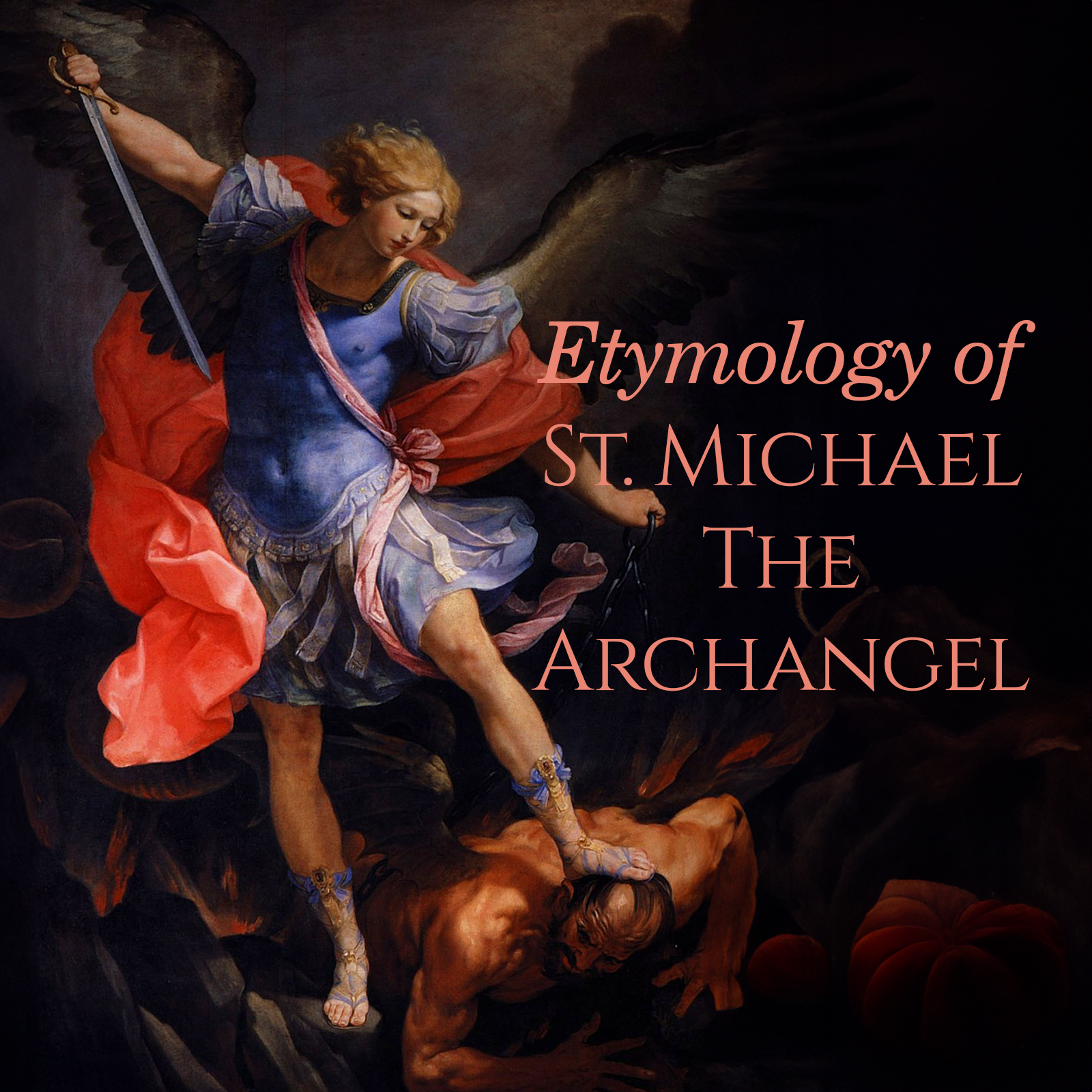
In the sacred economy of divine Providence, where the invisible realities of heaven sustain the visible Church Militant, few truths shine with such luminous power as the etymology of St. Michael the Archangel. This glorious Prince of the Heavenly Host bears a name that is itself a perpetual act of adoration and a weapon of victory. Rooted in the ancient Hebrew tongue and resounding through Sacred Scripture, the St. Michael the Archangel etymology proclaims the incomparable majesty of the Triune God: “Who is like God?” In Latin, this cry becomes the immortal battle shout Quis ut Deus?, which hurled Lucifer and his rebellious legions into the abyss.
Holy Mother Church, in her timeless wisdom preserved through the Catholic Encyclopedia, the writings of the Church Fathers, and the unchanging liturgy, teaches us that names in Scripture reveal vocation and essence. Thus the meaning of name Michael Catholic is no mere linguistic curiosity but a fountain of spiritual strength for every soul engaged in the combat of faith. Let us reverently unfold this mystery, drawing solely from the deposit of faith, that our hearts may burn with greater devotion to the great Archangel who defends the honor of Our Lord Jesus Christ.
The Hebrew Origin of St. Michael the Archangel Etymology: Mikha’el
The name Michael derives directly from the Hebrew Mikha’el (מִיכָאֵל), a compound of mi (“who”), kha (“like”), and El (“God”). It forms a rhetorical question whose answer echoes through eternity: “Who is like God?” No creature, however exalted, can claim equality with the Creator.
This Hebrew origin Michael Archangel entered Christian revelation through the Septuagint and the Vulgate of St. Jerome. In the sacred treasury of tradition, it stands as the antithesis of satanic pride. When Lucifer proclaimed “I will be like the Most High” (Isaiah 14:14), St. Michael answered with his very name, rallying the faithful angels to victory. The Catholic Encyclopedia records with venerable authority that “his name was the war-cry of the good angels in the battle fought in heaven against the enemy and his followers.”
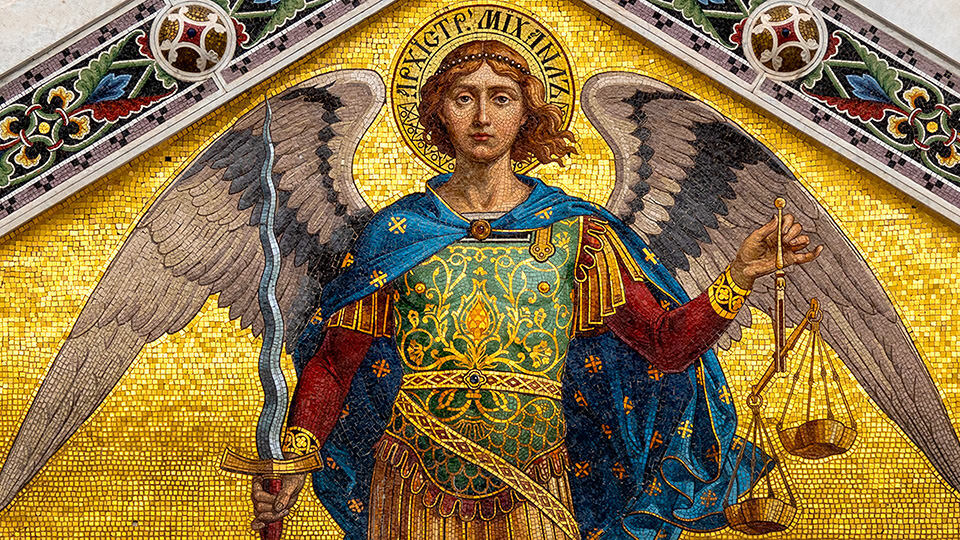
Traditional Byzantine mosaic icon of St. Michael the Archangel, evoking the ancient Hebrew roots of his name Mikha’el and his eternal proclamation of God’s uniqueness.
Thus the Biblical etymology name Michael is not abstract but profoundly personal. It defines the Archangel’s mission as guardian of the divine order, protector of the Church, and conqueror of every spirit that dares usurp the throne of the Most High.
Quis Ut Deus: The Triumphant War Cry That Cast Down the Dragon
No phrase captures the St. Michael the Archangel etymology Catholic tradition more forcefully than the Latin translation Quis ut Deus?. In countless traditional depictions, the Archangel bears this inscription upon his shield or banner as he tramples the ancient serpent.
When the great battle erupted in heaven, “Michael and his angels fought with the dragon” (Apocalypse 12:7). The cry Quis ut Deus? became the sword of the spirit that severed the rebel from the celestial court. Tradition and the Church Fathers teach that this exclamation expressed perfect humility: Michael did not claim glory for himself but redirected every eye to the sovereignty of God.
In Catholic iconography, this motto appears on shields, banners, and even the armor of the Archangel. It remains the watchword of the Church Militant today, reminding us that victory belongs not to human strength but to the God before whom no creature can stand equal.
St. Michael the Archangel in Sacred Scripture: Four Revelations of His Name
Holy Writ records the name Michael four times, each instance illuminating his role as defender and prince.
In the Book of Daniel, the Archangel appears as “one of the chief princes” who assists the heavenly messenger against the prince of Persia (Daniel 10:13) and as “the great prince who standeth for the children of thy people” (Daniel 12:1). He safeguards Israel and, by extension, the New Israel—the One, Holy, Catholic, and Apostolic Church.
The Epistle of St. Jude (9) reveals his humility: “When Michael the Archangel, disputing with the devil, he disputed about the body of Moses, he durst not bring against him a railing accusation, but said: The Lord rebuke thee.” Even in confrontation with Satan, St. Michael defers all judgment to God.
The culminating vision unfolds in the Apocalypse: “And there was a great battle in heaven, Michael and his angels fought with the dragon, and the dragon fought and his angels” (Apocalypse 12:7). The dragon was cast out, “that old serpent, who is called the devil and Satan” (Apocalypse 12:9). Here the Archangel Michael name meaning achieves its fullest expression: the one whose very name defeats the enemy of souls.
The Church Fathers, including St. Basil the Great and St. Thomas Aquinas in the Summa Theologica, affirm Michael’s preeminence among the angelic choirs. The Roman Breviary and Missal honor him as Princeps militiae caelestis—Prince of the Heavenly Host.
Centuries of Catholic Devotion: From Monte Gargano to the Prayer of Leo XIII
The Michael etymology Catholic tradition has shaped shrines, liturgy, and piety across the ages. The apparition at Monte Gargano in the sixth century and the majestic abbey of Mont Saint-Michel in France testify to his protective power. Popes, kings, and saints have placed kingdoms and souls under his banner.
In 1886, after a vision of demonic forces assailing the Church, Pope Leo XIII composed the prayer that bears the Archangel’s name. Once recited after every Low Mass, this invocation remains a bulwark for traditional Catholics:
“Saint Michael the Archangel, defend us in battle. Be our protection against the wickedness and snares of the devil…”
Every recitation echoes the meaning of name Michael Catholic: Who is like God? No one. Therefore we fear nothing while he fights for us.
The Catechism of the Catholic Church (nn. 328-336) upholds the reality of the angels and their mission, with St. Michael standing foremost in the service of Christ the King.
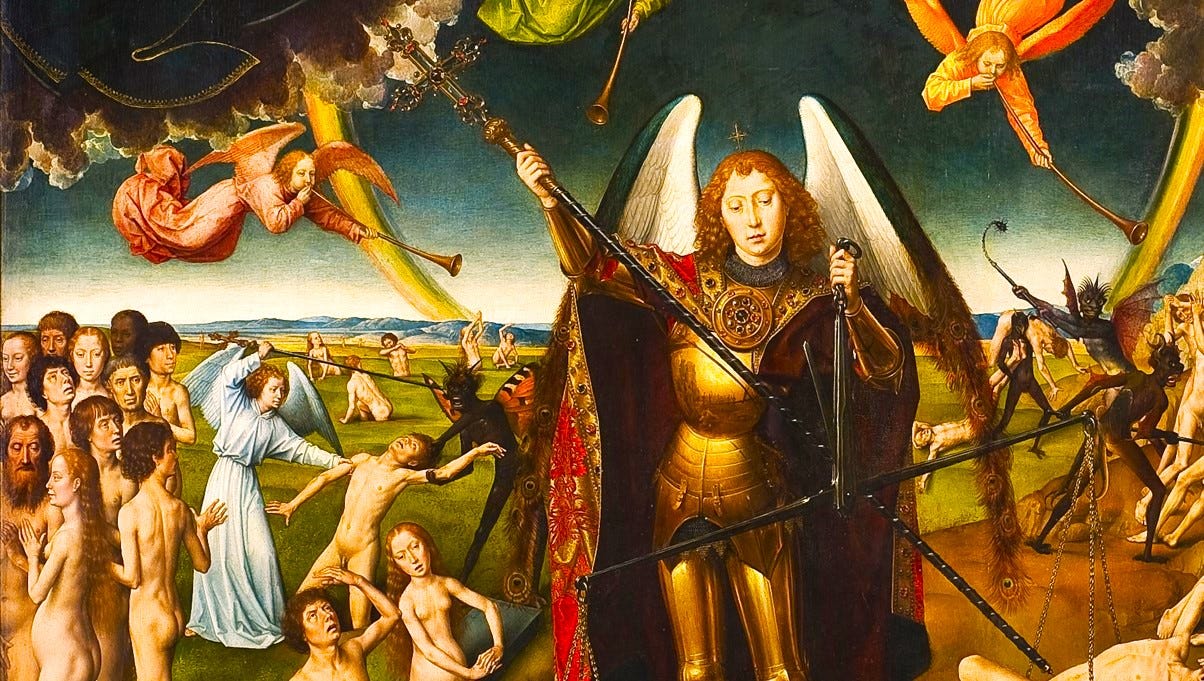
Medieval Catholic masterpiece depicting St. Michael the Archangel weighing souls at the final judgment, a powerful reminder of his role in salvation history.
Spiritual Fruits of Meditating on the Name Michael
Contemplating the St. Michael the Archangel etymology yields abundant grace. It mortifies pride—the root of every sin—and cultivates the virtue of humility so beloved of Our Lady. It arms the soul for daily spiritual warfare, urging frequent Confession, worthy reception of Holy Communion, and the daily Rosary.
Traditional Catholics invoke St. Michael at the bedside of the dying, during exorcisms, and in defense of the family. The Chaplet of St. Michael and the Scapular bearing his image remain powerful sacramentals approved by the Church.
In an age when hell’s smoke seeks to obscure the eternal truths, the name Mikha’el shines like a beacon: “Who is like God?” Let this question purify our intentions, strengthen our resolve, and draw us ever closer to the Sacred Heart of Jesus.

Ancient Catholic icon of St. Michael the Archangel in combat with the devil, scales of justice in hand—embodying the eternal triumph of humility over pride.
A Pious Call to Action: Entrust Yourself to the Prince of the Heavenly Host
Beloved souls striving for sanctity, the etymology of St. Michael the Archangel is no distant history but a living invitation. Consecrate your home, your parish, and your nation to this glorious Archangel. Pray his prayer daily after the Rosary. Wear his medal. Attend the Traditional Latin Mass with renewed fervor. Frequent the sacraments. Live in a state of grace.
St. Michael the Archangel will defend you in battle. He whose name proclaims the incomparable glory of God will lead you safely through every trial to the eternal triumph of Christ the King.
St. Michael the Archangel, defend us in battle! Be our protection against the wickedness and snares of the devil. May God rebuke him, we humbly pray, and do thou, O Prince of the Heavenly Host, by the power of God, thrust into hell Satan and all evil spirits who prowl about the world seeking the ruin of souls. Amen.
May the intercession of St. Michael the Archangel, the Blessed Virgin Mary, and all the saints obtain for you the grace of final perseverance. Quis ut Deus? Who is like God? No one—praise be to Him forever.