Catholic Daily Devotional: Nourish Your Soul

In the sacred embrace of the Catholic Church, a Catholic daily devotional stands as a beacon of divine grace, inviting the faithful to commune daily with Our Lord Jesus Christ through Scripture, prayer, and meditation. As the Catechism teaches, such practices foster a life of holiness, drawing from the wellsprings of sacred Tradition and the Magisterium to combat the distractions of the modern world. Rooted in the eternal truths proclaimed by the Church Fathers and papal teachings, this devotion echoes St. Paul's exhortation: "Pray without ceasing" (1 Thessalonians 5:17). Through Catholic daily readings, daily Catholic prayer, Bible verses about faith, Catholic spiritual reflections, Rosary daily meditation, and saint of the day reflection, believers are equipped to pursue moral virtue and union with the Blessed Trinity, under the maternal guidance of the Immaculate Virgin Mary.
The Essence of Catholic Daily Devotional Practices
A Catholic daily devotional is more than a routine; it is a profound encounter with God's mercy, as emphasized in the Directory on Popular Piety and the Liturgy, which highlights how pious exercises harmonize with the Liturgy to nurture faith. This document underscores that devotions like daily prayer are expressions of Christian piety, aligned with the Church's rhythms and norms, fostering a deeper relationship with Christ.
In traditional Catholicism, daily devotionals trace their origins to the early Church, where believers gathered for prayer and Scripture, as seen in Acts 2:42: "They devoted themselves to the apostles' teaching and fellowship, to the breaking of bread and the prayers." St. Augustine, in his Confessions, reflects on the transformative power of daily meditation, urging souls to seek God continually. Pope Leo XIII, in Supremi Apostolatus Officio, encouraged devotion to the Rosary as a daily practice for obtaining peace, illustrating how such habits fortify against spiritual adversaries.
Embracing a Catholic daily devotional combats secular temptations, promoting sanctity as taught in Mediator Dei by Pope Pius XII, which stresses that genuine piety requires meditation and spiritual exercises to sustain supernatural life. In our era, Pope Benedict XVI in Sacramentum Caritatis reaffirms the eucharistic form of Christian life, where daily prayer extends the graces of the Mass.

Catholic Daily Readings: Scripture's Daily Bread
Central to any Catholic daily devotional are the Catholic daily readings, provided by sources like the United States Conference of Catholic Bishops (USCCB), which offer lectionary-based reflections for each day. These readings, drawn from the liturgical calendar, include Old Testament, Psalms, Epistles, and Gospels, nourishing the soul as manna from heaven.
The Catechism (CCC 133) affirms that the Liturgy of the Word is integral to spiritual growth, echoing Vatican II's Sacrosanctum Concilium, which calls for vigorous Christian life through Scripture. St. Jerome's adage, "Ignorance of Scripture is ignorance of Christ," underscores the necessity of daily immersion.
For instance, on ordinary days, readings might include Hebrews 11:1: "Faith is the assurance of things hoped for, the conviction of things not seen," inviting reflection on trust in God amidst trials. Resources like the USCCB website provide audio and video reflections, making daily engagement accessible. Traditional Catholics integrate these into morning prayer, aligning with the Church's rhythm to sanctify time.
Daily Catholic Prayer: Communion with the Divine
Daily Catholic prayer forms the heartbeat of a Catholic daily devotional, as exhorted in Marialis Cultus by Pope Paul VI, which promotes prayers like the Rosary for contemplating Christ's mysteries. This encyclical emphasizes Mary's role as a model, urging rhythmic recitation to meditate on salvific events.
The Liturgy of the Hours, rooted in ancient monastic traditions, structures daily prayer with psalms and readings, as Sacramentum Caritatis notes its enrichment of Eucharistic understanding. St. Teresa of Ávila, in her Interior Castle, teaches that mental prayer fosters intimate union with God, combating distractions through disciplined devotion.
In practice, begin with morning offerings, invoking the Holy Spirit, and conclude with evening examinations of conscience, as recommended by St. Ignatius of Loyola. Such prayers cultivate virtues, aligning with Ephesians 6:18: "Pray at all times in the Spirit."
Bible Verses About Faith: Pillars of Trust
Bible verses about faith are essential in Catholic daily devotionals, providing scriptural anchors for meditation. Hebrews 11:1 defines faith as "the assurance of things hoped for," emphasizing certainty in the unseen, as explored in Catholic teachings.
James 2:14-26 integrates faith with works: "Faith by itself, if it has no works, is dead," countering sola fide misconceptions and aligning with Trent's decrees on justification. St. Thomas Aquinas in Summa Theologica elaborates that faith, hope, and charity are theological virtues infused by grace.
Meditate on Matthew 17:20: "If you have faith as a grain of mustard seed... nothing will be impossible to you," inspiring perseverance. Pope Francis in Lumen Fidei highlights faith's role in illuminating life's journey, drawing from patristic wisdom.
Catholic Spiritual Reflections: Interior Growth
Catholic spiritual reflections deepen daily devotionals, as seen in resources like Catholic Daily Reflections, offering Gospel meditations for personal prayer. These encourage lectio divina, harmonizing with the Church's call in Dei Verbum for contemplative Scripture reading.
St. John of the Cross in Ascent of Mount Carmel advises detachment for divine union, while Living Faith provides quarterly devotions based on Mass readings. Reflections on virtues, as in Philippians 4:8, foster moral excellence, echoing Aristotle through a Thomistic lens.
Creighton University's daily reflections exemplify community-based insights, promoting shared faith journeys.
Rosary Daily Meditation: Path to Contemplation
Rosary daily meditation is a cornerstone of Catholic devotion, as urged in the apostolic letter Rosarium Virginis Mariae by St. John Paul II, which presents the Rosary as a compendium of the Gospel, inviting the faithful to contemplate the mysteries of Christ's life through the eyes of the Blessed Virgin Mary. This profound prayer unites vocal repetition with mental meditation, fostering a deeper union with Our Lord and His Mother, as it draws upon the Hail Mary, derived from Scripture (Luke 1:28, 42), and the Our Father taught by Christ Himself (Matthew 6:9-13).
In traditional Catholicism, the Rosary serves as a spiritual weapon against the forces of evil, as St. Louis de Montfort elucidates in his treatise True Devotion to Mary, where he describes it as a "divine summary of the mysteries of the life, passion, death, and glory of Jesus and Mary," empowering souls to conquer temptations and advance in virtue. The mysteries—Joyful, Sorrowful, Glorious, and Luminous—guide the meditator through the salvific events, promoting contrition for sins, gratitude for redemption, and hope in eternal life. St. Pio of Pietrelcina, a modern saint devoted to the Rosary, prayed multiple sets daily, affirming its efficacy in obtaining graces and intercessions from the Immaculate Heart of Mary.
Our Lady's apparitions at Fatima further emphasize the daily Rosary, where she implored the children to pray it for the conversion of sinners and world peace, promising that "the Rosary can stop wars and natural disasters," as recorded in authentic accounts of the events. In practice, begin with the Sign of the Cross, recite the Apostles' Creed, and proceed through the beads, offering each decade for specific intentions, such as the Holy Father's intentions or personal sanctification. Resources like the podcast Daily Rosary Meditations provide guided sessions under 25 minutes, blending Scripture readings with reflections on the mysteries, making it accessible for busy faithful.
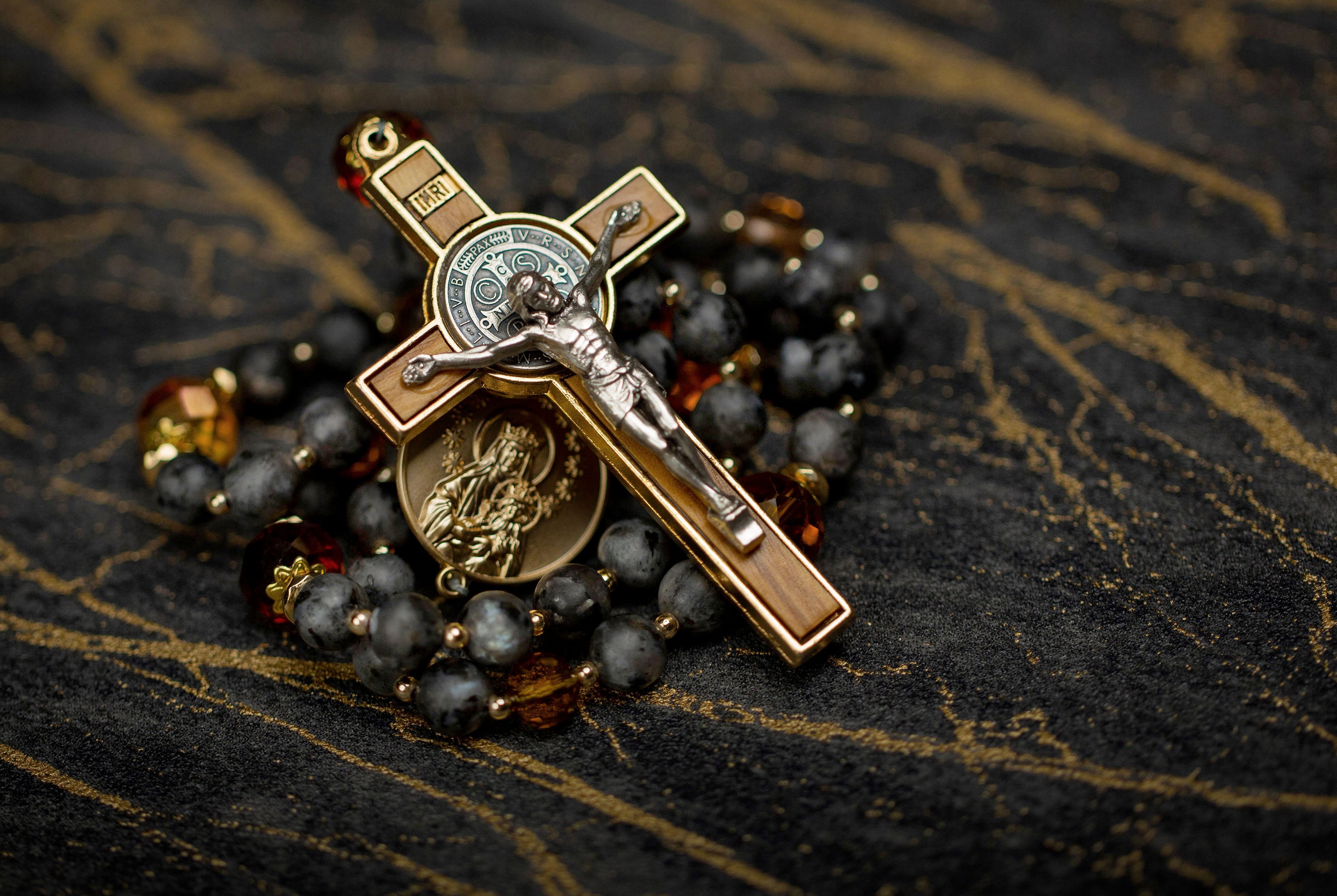
To enhance your Rosary devotion, consider using a beautifully crafted rosary that inspires reverence and focus. Visit our shop at www.theotokosrosaries.com to explore handmade rosaries designed with faith and devotion in mind, such as those featuring precious beads and crucifixes that aid in prayerful contemplation.
Saint of the Day Reflection: Imitating Holiness
Saint of the day reflection honors the liturgical calendar, as in Franciscan Media's profiles, inspiring virtue emulation. Dynamic Catholic features patrons like St. Antony the Abbot, patron of farmers.
The Catechism (CCC 2030) calls saints models of holiness, with reflections fostering devotion. St. Thérèse of Lisieux's "little way" exemplifies daily sanctity.
Integrating Catholic Daily Devotionals into Life
To embrace these practices, start with USCCB readings, add Rosary, and reflect on saints. Apps like Living Faith enhance accessibility.
Vatican.va for encyclicals; USCCB.org for readings; NewAdvent.org for Fathers.

In conclusion, a Catholic daily devotional, enriched by these elements, leads to eternal life, as Ecclesia de Eucharistia affirms adoration's holiness source. Beloved in Christ, commit to daily prayer, seeking Mary's intercession. Frequent the sacraments, meditate on Scripture, and honor saints. May this devotion draw you to heaven's embrace. Ave Maria!