The Holy Rosary: Timeless Catholic Devotion and Historical Legacy

In an era fraught with spiritual challenges and moral disarray, the Holy Rosary stands as a beacon of divine grace, weaving together the threads of sacred history, miraculous interventions, and unwavering devotion to Our Lord Jesus Christ through the intercession of His Immaculate Mother. This venerable Marian prayer, rooted in ancient Christian traditions and enriched by heavenly apparitions, has shaped the faith of countless souls across centuries. As the Church teaches, it is a spiritual weapon forged in heaven, drawing upon sacred Scripture and the wisdom of the saints to combat heresy, foster virtue, and invoke God's mercy. In this post, we explore the profound history of the Rosary, delve into inspiring stories and miracles associated with it, and reflect on its enduring benefits, all grounded in the timeless doctrines of the Catholic Church to inspire a deeper commitment to this powerful devotion.
The Rich History of the Holy Rosary: From Ancient Origins to Divine Entrustment
The Holy Rosary, a cornerstone of Catholic devotion, traces its origins to the earliest days of Christian prayer, evolving from simple repetitive devotions into a structured meditation on the life of Christ. According to venerable traditions, its defining moment occurred in the 13th century when Our Lady appeared to St. Dominic, entrusting him with the Rosary as a potent weapon against the Albigensian heresy that plagued France. This apparition, around 1221, marked the Rosary as a gift from heaven, with Mary promising that its faithful recitation would bring apostolic success and spiritual victories. St. Dominic, founder of the Order of Preachers, zealously promoted this Marian prayer, and the Dominicans played a pivotal role in its dissemination worldwide.
Yet, the Rosary's roots extend far deeper into Christian history. In the early Church, monks and hermits used knotted cords or pebbles to count prayers, a practice echoing the recitation of the 150 Psalms in the Divine Office. For illiterate lay faithful unable to read the Psalms, these "Paternosters"—strings of beads for tallying Our Fathers—emerged by the 11th and 12th centuries, often comprising 50 or 150 beads to mirror the Psalter. This humble beginning reflects the Church's desire to make prayer accessible to all, fostering devotion amid daily labors.
By the late Middle Ages, the Rosary began to incorporate meditations on the mysteries of Christ's life, death, and resurrection, intertwined with the Hail Mary. The name "Rosary" itself derives from the Latin "rosarium," symbolizing a garland of roses offered to the Blessed Virgin. The structure solidified between the 12th and 15th centuries, with the addition of the Glory Be and the formalization of the Hail Mary's second half: "Holy Mary, Mother of God, pray for us sinners now and at the hour of our death."
In the 16th century, Pope St. Pius V standardized the Rosary in his 1569 bull Consueverunt Romani Pontifices, establishing the 15 mysteries—Joyful, Sorrowful, and Glorious—as we traditionally know them. This papal endorsement affirmed its efficacy against spiritual threats, including the Ottoman invasions. Centuries later, in 2002, Pope St. John Paul II enriched this devotion by introducing the Luminous Mysteries in his apostolic letter Rosarium Virginis Mariae, illuminating Christ's public ministry and inviting deeper contemplation.
Throughout history, the Rosary has adapted while remaining anchored in tradition, serving as a bridge between the laity and the monastic prayer life. Its evolution underscores God's providential care, transforming simple beads into a profound instrument of grace.


Miraculous Stories and Interventions: The Rosary in Catholic History
The Holy Rosary is not merely a historical artifact but a living testament to divine intervention, with countless stories and miracles illustrating its power in times of peril, conversion, and grace. These narratives, drawn from Church tradition and papal accounts, reveal how devotion to the Rosary has altered the course of history and individual lives, always in fidelity to Christ's redemptive mission.
The Battle of Lepanto: A Heavenly Victory Over Overwhelming Odds (1571)
One of the most renowned miracles associated with the Rosary occurred at the Battle of Lepanto on October 7, 1571. Facing a formidable Ottoman fleet intent on conquering Christian Europe, Pope St. Pius V called upon the faithful across the continent to pray the Rosary fervently for victory. The Christian forces, outnumbered and outgunned, were led by Don Juan of Austria, who distributed Rosaries to his soldiers and urged communal prayer before battle. Miraculously, the winds shifted in their favor, leading to a decisive triumph that halted the Ottoman advance. At the moment of victory, Pope Pius V, miles away in Rome, rose in ecstasy and proclaimed the fleet's success, attributing it to Our Lady's intercession. In gratitude, he instituted the feast of Our Lady of Victory, later renamed Our Lady of the Rosary, commemorating this heavenly aid.

Our Lady of Fatima: The Call to Daily Rosary Amid Apocalyptic Visions (1917)
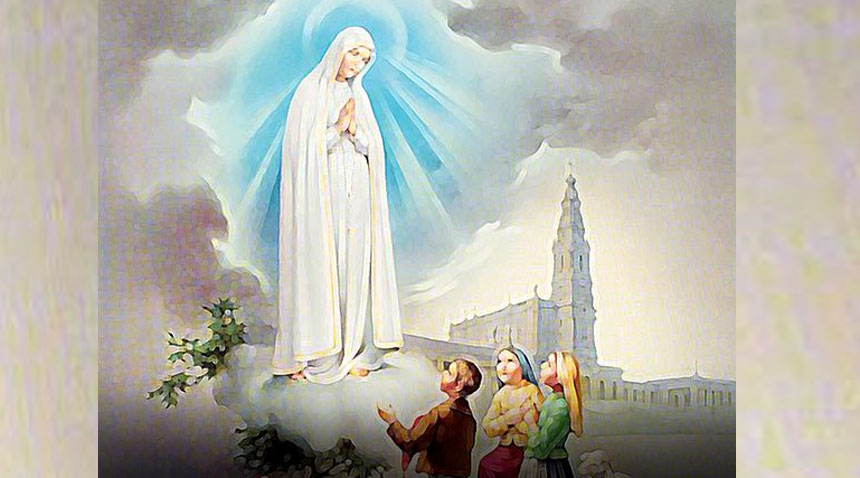
In 1917, amid the horrors of World War I, the Blessed Virgin appeared to three shepherd children in Fatima, Portugal, identifying herself as Our Lady of the Rosary. She urged them to pray the Rosary daily for peace, conversion of sinners, and to avert greater calamities, revealing visions of hell and prophecies of future trials. The Miracle of the Sun on October 13, witnessed by tens of thousands, confirmed her messages, with the sun dancing in the sky as a sign of divine authenticity. This apparition reinforced the Rosary's role in spiritual warfare, leading to widespread devotion and the addition of the Fatima Prayer to the decades.
St. Bernadette and Lourdes: The Rosary in Healing Apparitions (1858)
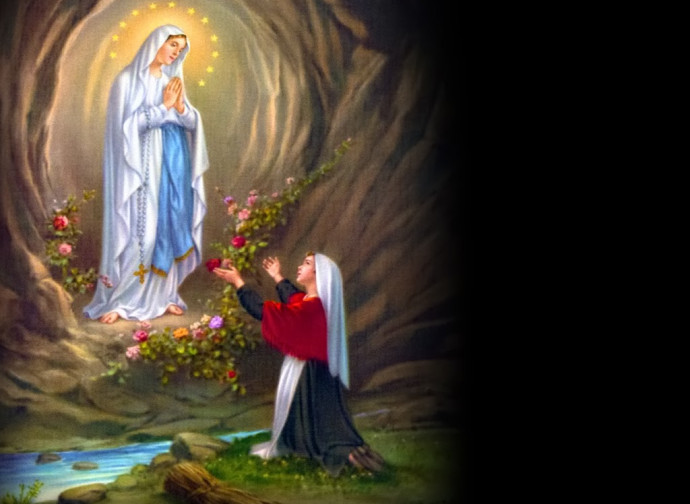
At Lourdes, France, in 1858, the young St. Bernadette Soubirous encountered Our Lady 18 times, often while praying the Rosary. Mary, appearing as the Immaculate Conception, joined Bernadette in reciting the prayers, emphasizing the Glory Be with profound reverence. These visions led to the discovery of a miraculous spring, whose waters have healed thousands, underscoring the Rosary's connection to sacramental grace and Mary's maternal care. Lourdes remains a pilgrimage site where the Rosary continues to inspire faith and miracles.
The Hiroshima Miracle: Survival Amid Atomic Devastation (1945)
In a modern testament to the Rosary's protective power, eight Jesuit priests survived the atomic bomb dropped on Hiroshima on August 6, 1945, despite being mere blocks from ground zero. Living in a rectory dedicated to Our Lady of the Assumption, they attributed their unharmed state—amid 100,000 deaths—to daily Rosary devotion and fidelity to Fatima's message. Fr. Hubert Schiffer later recounted the event at international congresses, affirming that prayer shielded them from radiation and destruction.
Other Inspiring Conversions and Healings
The Rosary has wrought personal miracles, such as the healing of Fr. Patrick Peyton from advanced tuberculosis in 1938 through devoted recitation, leading him to promote family Rosary worldwide with the motto, "The family that prays together stays together." Similarly, Bartolo Longo, a former Satanist, converted via the Rosary in the 19th century, building the Shrine of Our Lady of the Rosary in Pompeii and earning beatification. At the Battle of Muret in 1213, the Rosary aided victory over Albigensians, further solidifying its role against heresy.
These stories illuminate the Rosary's miraculous legacy, inviting us to embrace it as a shield in our own trials.
Praying the Holy Rosary: Guidance on Structure and Mysteries
For those seeking to incorporate this devotion into daily life, a comprehensive guide to praying the Rosary, including step-by-step instructions and meditations on the Joyful, Sorrowful, Glorious, and Luminous Mysteries, is essential. We recommend our detailed article, which faithfully adheres to traditional Catholic teachings: How to Pray the Rosary.
The Profound Benefits of the Rosary: Spiritual Armor and Grace
The benefits of the Rosary extend far beyond mere recitation; it is a conduit of divine grace, as attested by saints and popes. St. Louis de Montfort proclaimed, "The Rosary is the most excellent form of prayer and the most efficacious means of attaining eternal life." According to tradition, Our Lady revealed 15 promises to those who pray it devoutly, including signal graces, protection from hell, and deliverance from purgatory.
Papal encyclicals emphasize its role in spiritual warfare. Pope Pius XI urged, "If you desire peace in your hearts, in your homes, and in your country, assemble each evening to recite the Rosary." St. Padre Pio called it "the weapon against the evils of the world today." Through daily Rosary devotion, the faithful experience purification of soul, victory over enemies, and enrichment with merits, as it gradually imparts perfect knowledge of Christ and sets hearts aflame with love.
In times of societal decay, as noted in Ingravescentibus Malis (1937) by Pius XI, the Rosary counters escalating evils with Mary's maternal aid. It promotes family unity, as St. John XXIII encouraged in Grata Recordatio (1959), fostering moral virtue and devotion.
Papal Encyclicals: Enduring Exhortations to Rosary Devotion
The Church's shepherds have issued numerous encyclicals extolling the Rosary. Leo XIII's Magnae Dei Matris (1892) links it to Mary's maternal care, urging its use for Christian renewal. Pius XII's Ingruentium Malorum (1951) calls for family recitation amid global threats. These documents, accessible on Vatican.va, affirm the Rosary's timeless efficacy.
For further reading, consider these links:
- Vatican.va: Rosarium Virginis Mariae
- NewAdvent.org: Catholic Encyclopedia on the Rosary
- USCCB: The Rosary in Catholic Life
- How to Pray the Rosary
Embracing Daily Rosary Devotion for Spiritual Growth
Incorporating the daily Rosary into one's life aligns with the Church's call to ceaseless prayer (1 Thessalonians 5:17). As St. Josemaria Escriva taught, "The Holy Rosary: the joys, the sorrows, and the glories of the life of Our Lady weave a crown of praises." This practice cultivates humility, perseverance, and reliance on Mary's intercession, leading to sanctity.
In conclusion, the Holy Rosary is not merely a prayer but a historical and miraculous pathway to eternal truths, offering sacramental grace and moral fortitude in a world beset by sin. Let us heed the words of Our Lady at Fatima: "Pray the Rosary every day." Commit to this devotion, perhaps acquiring a well-crafted set of beads to aid your journey—such as those from Theotokos Rosaries —and invite others to join. Through faithful recitation, may we draw closer to Christ, fortified by His Mother's loving gaze, and advance toward the heavenly kingdom. Ave Maria!