The Crucifix: Catholic Meaning and Symbolism

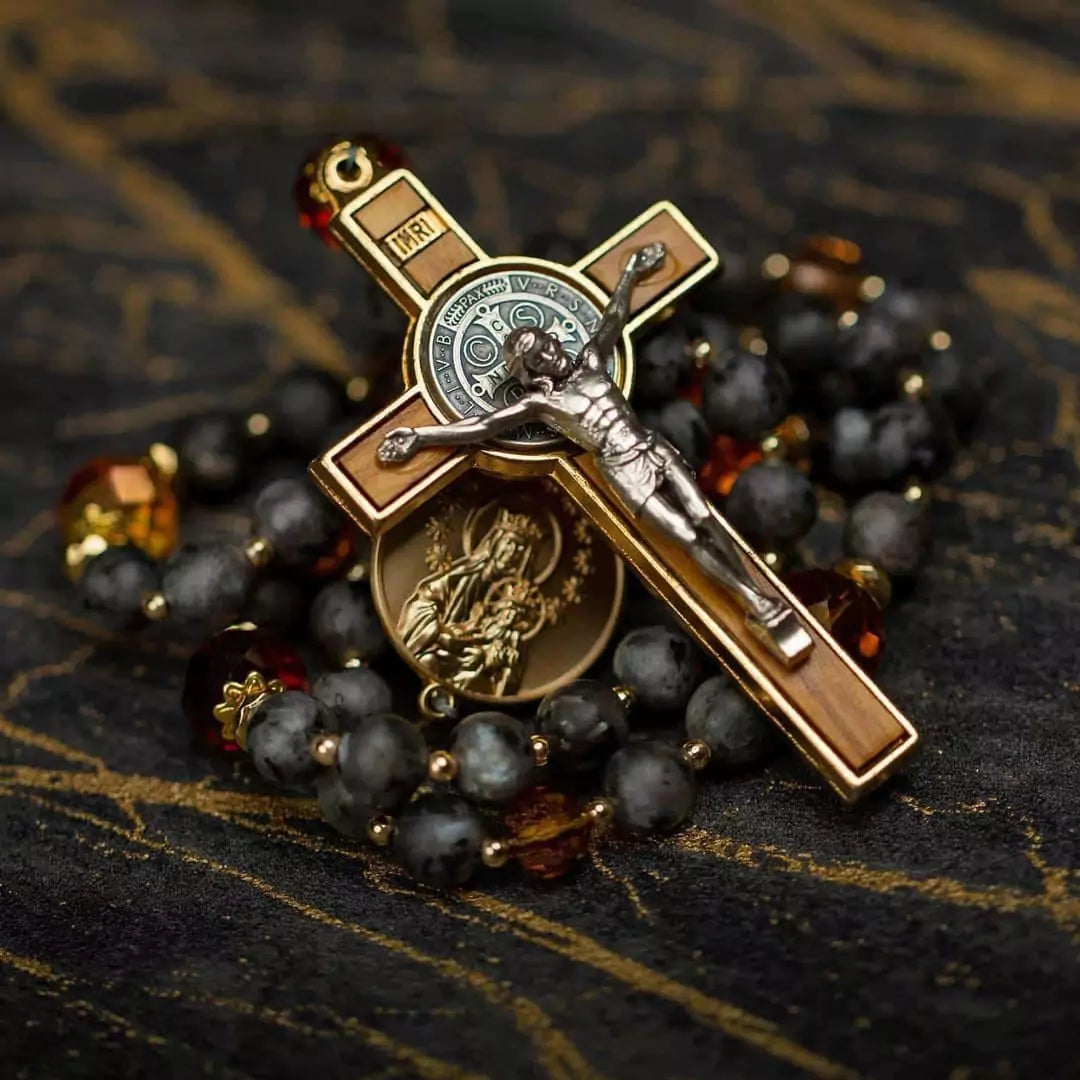
In the solemn hush of a Catholic sanctuary, the crucifix commands reverence, drawing the soul to contemplate the unfathomable mystery of God's love manifested in the Passion of Our Lord Jesus Christ. As the Catechism of the Catholic Church teaches, the crucifix is not merely a symbol but a sacramental that "disposes the faithful to receive grace" (CCC 1670), reminding us of the redemptive sacrifice that conquered sin and death. Rooted in Sacred Scripture—where St. Paul proclaims, "We preach Christ crucified" (1 Cor 1:23)—this sacred emblem fosters devotion to the Blessed Virgin Mary, who stood at the foot of the Cross, and invites us to unite our sufferings with His. In this article, we explore the profound meaning, historical roots, and spiritual graces of the crucifix, emphasizing its distinction from the plain cross and its role in daily prayer. Through Church teachings and the writings of the saints, we seek to deepen our commitment to moral virtue and eternal union with Christ, highlighting designs like those from Theotokos Rosaries, where every rosary crucifix incorporates the Saint Benedict Medal for added protection.
The Historical Roots of the Crucifix in Catholic Tradition
The crucifix, depicting Christ affixed to the cross, emerges from the earliest Christian devotion to the Passion, evolving as a central emblem of faith. In the primitive Church, as detailed in the New Advent Catholic Encyclopedia, the cross symbolized hope and victory, but representations of the Crucified Christ were veiled due to persecution and the "Discipline of the Secret." Archaeological evidence from catacombs and sarcophagi shows symbolic forms like the anchor or chi-rho, avoiding direct imagery to protect the sacred mysteries.
By the fourth century, following Constantine's vision and the Edict of Milan (313 AD), the cross gained prominence. St. Helena's discovery of the True Cross in 326 AD, as recounted by Eusebius, marked a pivotal moment, leading to its veneration. Yet, the crucifix as we know it—Christ's body on the cross—appeared later, around the sixth century, influenced by theological emphasis on the Incarnation and suffering. The Council of Trullo (692 AD) encouraged depictions of Christ in human form to affirm His dual nature against iconoclasm.
In medieval times, crucifixes adorned churches, as seen in the Ruthwell Cross (eighth century), blending Celtic art with Gospel narratives. The Church Fathers, like St. Augustine in "City of God," viewed the cross as the tree of life reversing Eden's fall. Papal encyclicals, such as Pope Leo XIII's "Supremi Apostolatus Officio" (1883), underscore its role in combating evil, aligning with Vatican II's call to venerate sacred images (Sacrosanctum Concilium, 125).
This development reflects the Church's unchanging doctrine: the crucifix is a tangible link to Calvary, fostering piety as urged in CCC 2132.
Understanding the Symbolism: Christ on the Cross
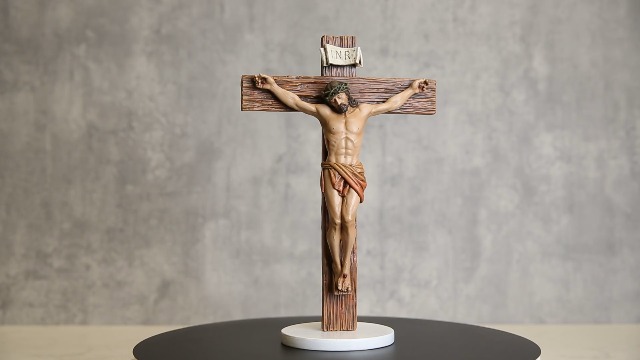
The crucifix's profound symbolism lies in its portrayal of Christ's body, evoking the reality of His sacrifice. Unlike the plain cross, which signifies resurrection or general Christianity, the crucifix emphasizes the Passion, as explained in Catholic Answers: it recalls "the Victim offered on the altar is the same as on the Cross." This distinction matters, for the corpus invites meditation on Isaiah 53:5—"By his wounds we are healed."
Each element bears meaning: the outstretched arms symbolize universal redemption (John 12:32); the crown of thorns, humility against pride; the wounds, atonement for sin. St. Thomas Aquinas in "Summa Theologica" (III, q. 46) teaches that Christ's suffering exemplifies perfect love, combating vice through virtue.
In Marian devotion, the crucifix echoes Our Lady's sorrow at Calvary, as in the Seven Dolors, drawing souls to her intercession. The Catechism affirms: "The cross is the unique sacrifice of Christ" (CCC 613), making the crucifix a catalyst for contrition and grace.
Crucifix vs. Cross: Key Differences in Catholicism
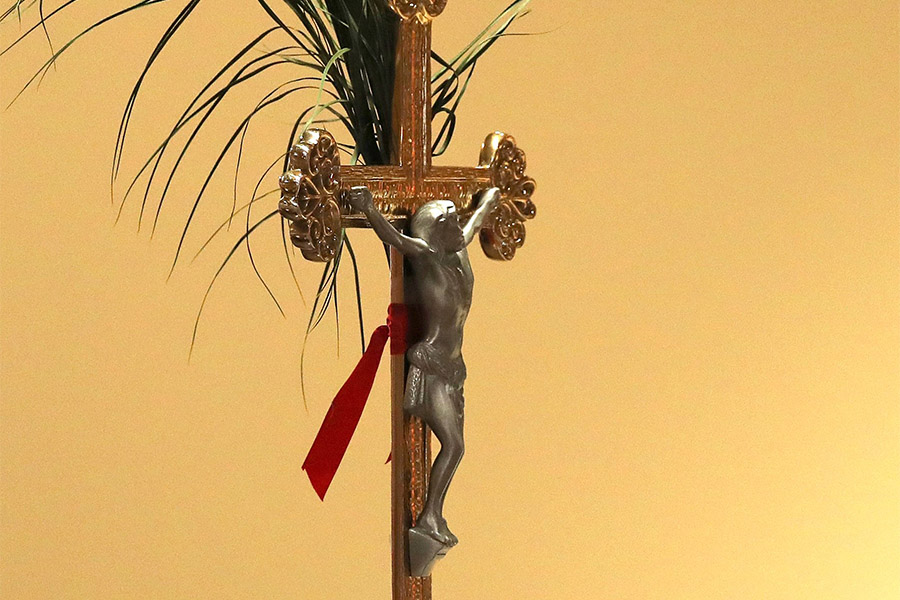
A common query: crucifix vs. cross difference. The cross is a "T"-shaped symbol without the corpus, often representing resurrection, as some Protestants emphasize. The crucifix includes Christ's body, focusing on the sacrificial act, per Catholic tradition. As Catholic Stand notes, it reminds us of "the greatest gift of love." Church teaching prefers the crucifix for altars (GIRM 308), underscoring the Mass as Calvary re-presented.
The Blessing and Sacramental Graces of the Crucifix
The crucifix becomes a sacramental through blessing, channeling grace as per CCC 1667: "Sacred signs which bear a resemblance to the sacraments." The Roman Ritual provides formulas, such as: "Bless this cross... that it may be a saving help to mankind." This imparts protection against evil, akin to exorcistic power.
Sacramental graces include healing, fortitude, and reminder of baptismal vows. St. John of the Cross in "Ascent of Mount Carmel" urges contemplation of the crucifix for spiritual ascent. Blessed crucifixes ward off temptation, as taught in CCC 1671.
In homes, it sanctifies spaces, fostering family prayer. Pope Pius XII in "Mediator Dei" (1947) encouraged its use for devotion.
Variations in Crucifixes: Staying True to Tradition
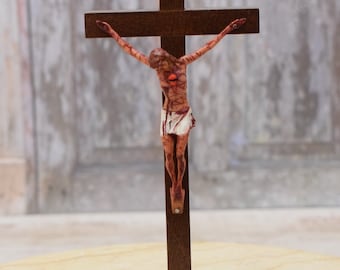
Traditional crucifixes vary: the San Damiano Cross, inspiring St. Francis; the Byzantine style with elongated Christ; or simple wooden ones. All must depict the corpus authentically, avoiding novelties per Church guidelines.
Portable crucifixes, like those in rosaries, aid daily devotion. At Theotokos Rosaries, crucifixes embed the Saint Benedict Medal, blending protections against evil with Passion meditation. Discernment ensures orthodoxy, as Vatican II warns against superstition.
Wearing the Crucifix: A Guide for Daily Devotion
Wearing a crucifix is an apostolic tradition, symbolizing discipleship (Luke 9:23). Catholic Answers affirms: "Wear whichever [cross or crucifix] you prefer," but the corpus identifies one as Catholic. Bless it for graces, invoking protection.
Daily, kiss it upon waking, recalling Christ's love. In trials, hold it while praying the Stations of the Cross. St. Padre Pio wore one, exemplifying constant union with Calvary.
For families, teach children its meaning, as Pope John Paul II urged in "Familiaris Consortio" (1981).

The Graces and Indulgences Attached to the Crucifix
Devout veneration yields graces: partial indulgences for kissing a blessed crucifix (Enchiridion Indulgentiarum, 1999). It remits venial sin, fostering virtues like patience (Romans 5:3-5).
Saints attest: St. Therese of Lisieux found strength in hers during illness. As a sacramental, it combats evil per CCC 1674.
Common Questions About the Catholic Crucifix
Why Depict Christ Suffering?
To recall redemption's cost, per CCC 616: "No one heals himself by wounding another."
Crucifix Materials?
Wood, metal, or precious stones; focus on devotion, not luxury.
Blessing a Crucifix?
Use the Roman Ritual: "Heavenly Father... bless this sign of glory."
From Catholic sources, the crucifix aids focus on salvation's mystery.
Conclusion: Embrace the Crucifix for Eternal Life
In an age of fleeting distractions, the crucifix anchors us to eternal truths, guiding our pilgrimage toward sanctity through Christ's Passion. Its precise depiction of suffering and love, rooted in Tradition, equips us for spiritual combat, nurturing virtues and devotion to Mary. As Pope Pius XII exhorted, let it adorn our lives, fostering moral growth.
We invite you, dear reader, to embrace this sacramental today—perhaps a rosary from Theotokos Rosaries, with its Saint Benedict Medal-embedded crucifix. Meditate on the Passion, join parish devotions, and implore Mary's aid for sinners' conversion. In nomine Patris et Filii et Spiritus Sancti. Amen!