
Saint Benedict Medal: Meaning and Protection
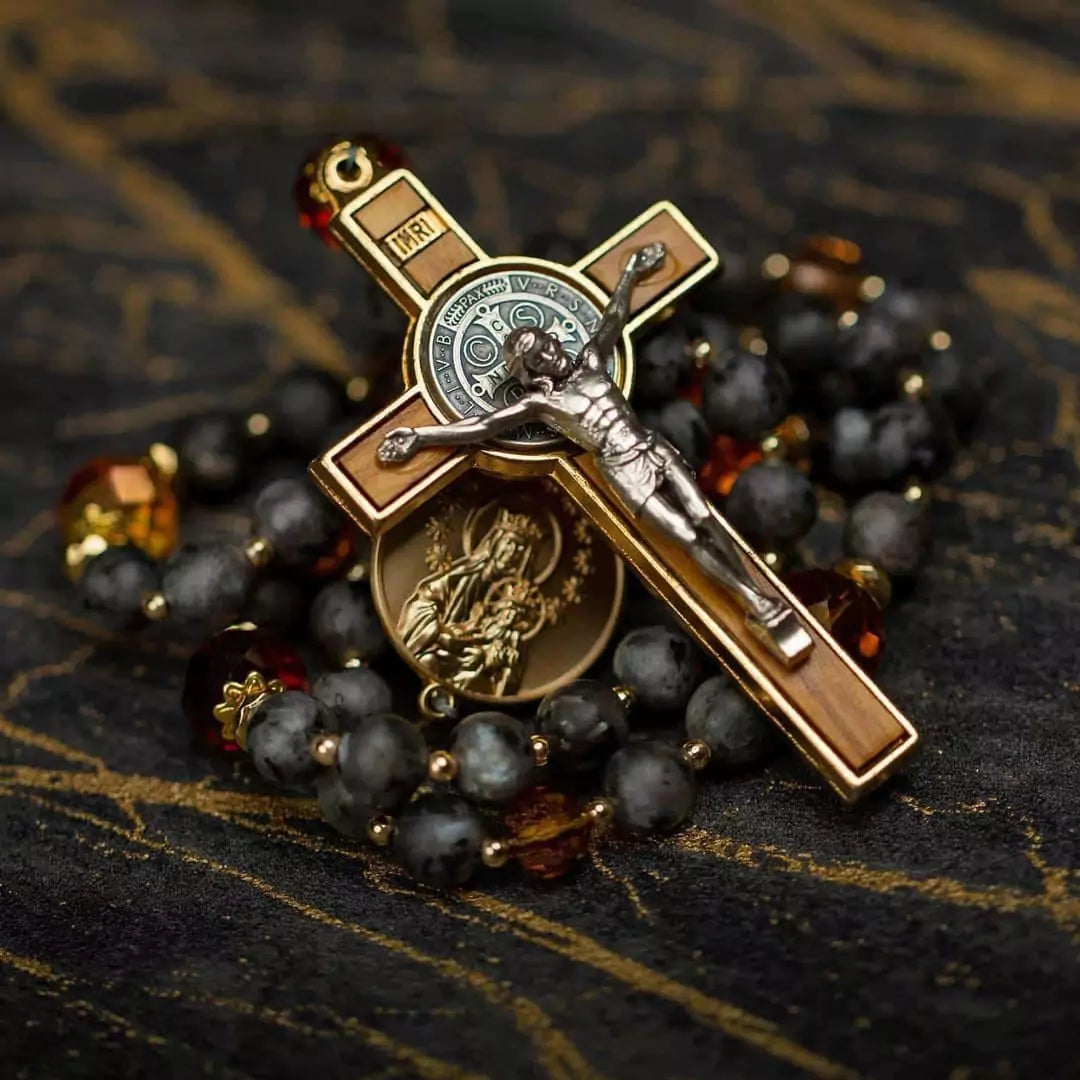
In the spiritual warfare that besets the faithful, the Saint Benedict Medal emerges as a formidable sacramental, sanctioned by Holy Mother Church for the protection of souls against the snares of the evil one. Rooted in the venerable tradition of St. Benedict of Nursia, whose Rule has guided monastic life for centuries, this medal embodies the power of the Cross and the intercession of the saints. As the Catechism of the Catholic Church teaches, sacramentals like this medal "are sacred signs which bear a resemblance to the sacraments" (CCC 1667), disposing the faithful to receive grace and sanctifying everyday life. In this article, we explore the history, symbolism, and protective graces of the Saint Benedict Medal, drawing from authoritative Church sources to foster devotion and vigilance in the pursuit of holiness. We particularly highlight its integration in devotional items, such as the rosaries from Theotokos Rosaries, where every crucifix incorporates this powerful medal, aiding Marian devotion in the battle for souls.
The Historical Roots of the Saint Benedict Medal in Catholic Tradition
The Saint Benedict Medal traces its origins to the life and miracles of St. Benedict of Nursia (c. 480-547), the Father of Western Monasticism, whose Rule emphasizes prayer, work, and obedience as paths to sanctity. According to the Dialogues of St. Gregory the Great (Book II), St. Benedict's life was marked by triumphs over demonic temptations, including poisoning attempts thwarted by divine intervention—a chalice shattering and a raven carrying away poisoned bread. These events symbolize the saint's authority over evil, which the medal commemorates.
The medal itself, originally a cross, gained prominence in the 17th century. In 1647, during a witchcraft trial in Natternberg, Bavaria, near the Benedictine Abbey of Metten, the accused confessed their spells were ineffective against the abbey due to its protection by the cross. Investigations revealed ancient crosses with mysterious initials, later deciphered as exorcistic prayers. Pope Benedict XIV formally approved the medal in 1741 and 1742, granting indulgences to the faithful who wear it devoutly. The jubilee medal, as known today, was struck in 1880 for the 1,400th anniversary of St. Benedict's birth, with the Archabbey of Monte Cassino holding exclusive rights to its production.
This historical development aligns with the Church's use of sacramentals to combat evil, as evidenced in similar practices for protection against pestilence. In traditional Catholicism, the medal resists demonic influences, echoing St. Benedict's exhortation in his Rule: "Let nothing be preferred to the love of Christ" (Rule of St. Benedict, Ch. 4).

Understanding the Symbolism: Front and Back of the Medal
The Saint Benedict Medal is rich in symbolism, serving as a tangible reminder of faith's victory over sin. The front side features St. Benedict holding a cross in his right hand—symbolizing the redemptive power of Christ's Passion—and his monastic Rule in his left, representing the path to holiness through discipline. At his feet are a poisoned chalice and a raven, recalling the miracles that preserved his life from Satan's plots. Surrounding the saint are the words "Crux Sancti Patris Benedicti" (The Cross of our Holy Father Benedict), and along the edge: "Ejus in obitu nostro praesentia muniamur" (May we be strengthened by his presence at the hour of our death).
The reverse side bears a cross with initials forming potent prayers against evil: on the vertical bar, "C S S M L" (Crux Sacra Sit Mihi Lux—May the Holy Cross be my light); on the horizontal, "N D S M D" (Non Draco Sit Mihi Dux—Let not the dragon be my guide). In the angles: "C S P B" (Crux Sancti Patris Benedicti—The Cross of our Holy Father Benedict). Encircling the cross are "V R S N S M V - S M Q L I V B" (Vade Retro Satana! Nunquam Suade Mihi Vana! Sunt Mala Quae Libas. Ipse Venena Bibas—Begone Satan! Never tempt me with your vanities! What you offer me is evil. Drink the poison yourself!). At the top is "PAX" (Peace), invoking the tranquility of Christ.
These elements draw from Scripture, such as Ephesians 6:12—"For our wrestling is not against flesh and blood; but against principalities and powers"—and align with the Church Fathers' teachings on spiritual combat. St. Augustine, in his "City of God," emphasizes the Cross as the ultimate weapon against the devil, a truth embodied in this medal.

The Protective Graces and Blessing of the Saint Benedict Medal
The Church bestows extraordinary graces upon those who devoutly use the Saint Benedict Medal, particularly when blessed with the special rite that includes exorcism prayers. This blessing, typically performed by a Benedictine priest or one delegated, invokes St. Benedict's intercession to repel evil influences, poisons, and temptations. The medal becomes a sacramental, not magical, but efficacious through faith, as per CCC 1670: "Sacramentals do not confer the grace of the Holy Spirit in the way that the sacraments do, but by the Church's prayer, they prepare us to receive grace and dispose us to cooperate with it."

Variations and Integration with Other Devotions: Staying True to Tradition
While the standard jubilee medal is most common, variations exist within orthodox bounds, such as smaller versions for keychains or integration into scapulars and rosaries. The Scapular of St. Benedict, which includes a black cloth with the medal, associates the faithful with the Benedictine Order and offers indulgences for various spiritual exercises. However, the Church cautions against unauthorized alterations, as Pius XII warned against novelties that dilute doctrine.
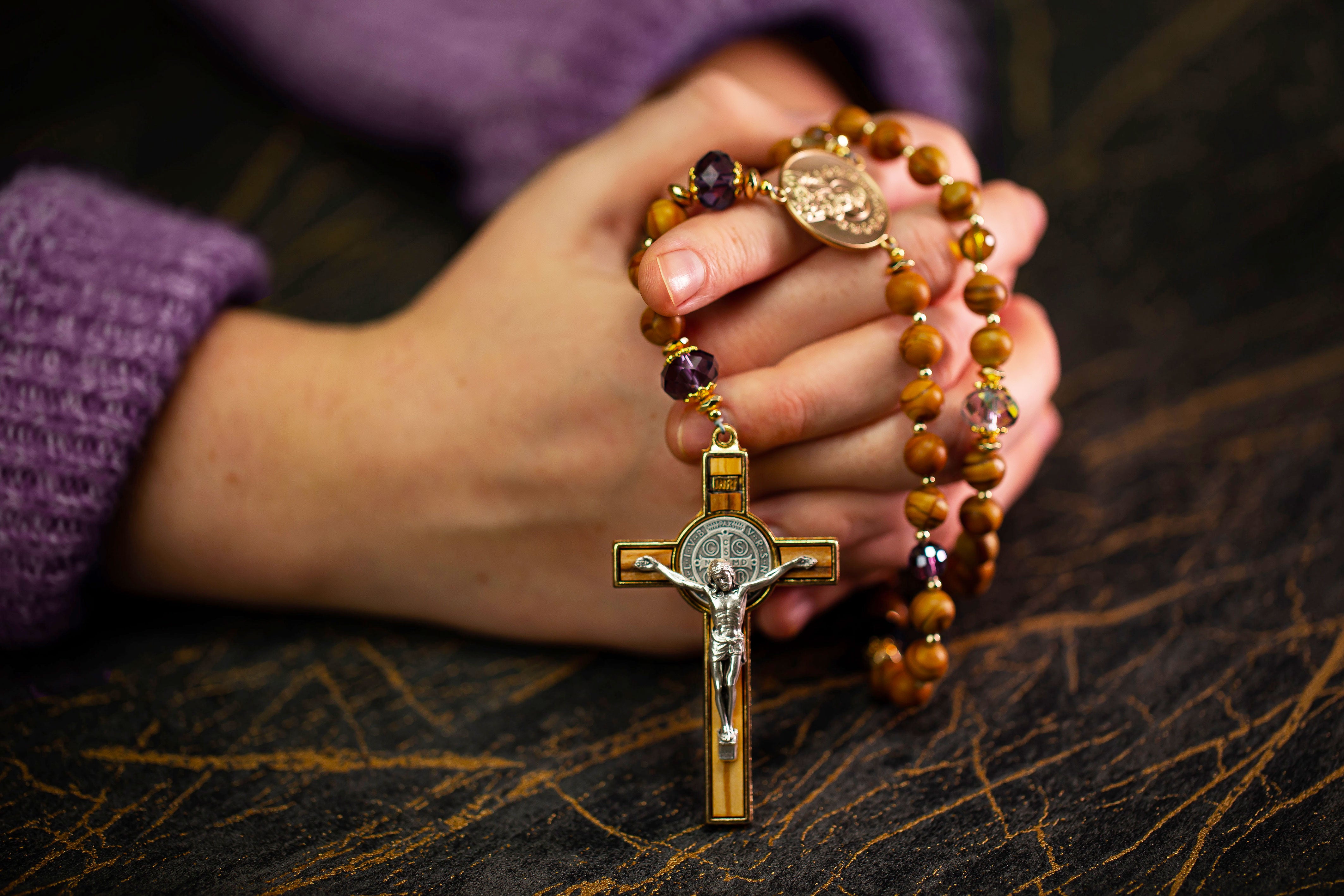
A cherished tradition is embedding the medal in rosary crucifixes, enhancing Marian devotion with Benedictine protection. At Theotokos Rosaries, every rosary features a crucifix incorporating the Saint Benedict Medal, handcrafted to honor timeless Catholic craftsmanship. This union amplifies the Rosary's power as a "weapon" (St. Padre Pio) against evil, aligning with Fatima's call to prayer and penance.
The faithful must ensure medals are properly blessed, as unblessed ones lack full efficacy. Resources like Catholic Answers affirm that authentic medals promote discipline without superstition.
Wearing the Saint Benedict Medal: A Guide for Daily Spiritual Defense
To harness the medal's graces, wear it around the neck or carry it piously after having it blessed. The rite involves holy water, exorcism prayers, and invocations: "May the intercession of the holy Father Benedict render thee pernicious dragon, never more to deceive the human race." Daily, invoke St. Benedict with the medal's prayers, especially in times of temptation: "Vade Retro Satana!"
For families, teach children its use, as Pope Pius XII urged the veneration of saints among the youth. In trials, hold it while praying the Rosary to multiply protections. St. Teresa of Avila attested to the efficacy of similar sacramentals: "The devil flees from the Cross."
The Indulgences and Spiritual Fruits of the Saint Benedict Medal
Devout use yields abundant indulgences: partial for pious invocation and plenary on feasts like St. Benedict's or with sacramental acts. The Enchiridion Indulgentiarum (1999) lists these, remitting temporal punishment and purifying the soul.
Saints like St. Gertrude the Great experienced visions confirming the value of sacramentals in meriting grace. Through the medal, virtues flourish—fortitude against evil, charity in trials—echoing James 4:7: "Resist the devil, and he will flee from you."
As a blessed object, it wards off evil per CCC 1674, becoming a channel of God's protection.
Common Questions About the Saint Benedict Medal
What Is the Proper Way to Bless the Medal?
Seek a Benedictine priest for the full rite, including exorcism; any priest may impart a simple blessing, but the special one enhances its power.
The approved exorcism and blessing:
V. Our help is in the name of the Lord.
R. Who made heaven and earth.
In the name of God the Father + almighty, who made heaven and earth, the seas and all that is in them, I exorcise these medals against the power and attacks of the evil one. May all who use these medals devoutly be blessed with health of soul and body. In the name of the Father + almighty, of the Son + Jesus Christ our Lord, and of the Holy + Spirit the Paraclete, and in the love of the same Lord Jesus Christ who will come on the last day to judge the living and the dead, and the world by fire.
Amen.
Let us pray. Almighty God, the boundless source of all good things, we humbly ask that, through the intercession of Saint Benedict, you pour out your blessings + upon these medals. May those who use them devoutly and earnestly strive to perform good works be blessed by you with health of soul and body, the grace of a holy life, and remission of the temporal punishment due to sin.
May they also with the help of your merciful love, resist the temptation of the evil one and strive to exercise true charity and justice toward all, so that one day they may appear sinless and holy in your sight. This we ask though Christ our Lord.
Amen.
The medals are then sprinkled with holy water.
Permissu superiorum
Nihil obstat and Imprimatur, Saint Cloud, 24 April 1980.
Can the Medal Be Worn with Other Sacramentals?
Yes, traditionally it can be worn with the Scapular or Miraculous Medal, amplifying devotions without conflict.
Why Is It Effective Against Evil?
Its efficacy stems from Church authority and faith, not magic; the prayers invoke Christ's victory, as seen in exorcisms. Catholic Answers notes its design focuses on the Cross, central to salvation.
Conclusion: Embrace the Saint Benedict Medal for Eternal Safeguard
Amidst the tempests of modernity, the Saint Benedict Medal stands as a beacon of traditional Catholic fortitude, guiding souls through the Cross to Christ's embrace. Its profound symbolism and graces, rooted in St. Benedict's legacy, equip the faithful for spiritual combat, fostering moral virtue and devotion to Our Lord. As Pope Benedict XIV approved, may it strengthen us at the hour of our death.
We invite you, dear reader, to don this medal today, perhaps integrated into a rosary from Theotokos Rosaries, where each crucifix bears this sacred emblem. Unite in prayer, beseeching St. Benedict's intercession for the Church's triumph and the salvation of souls. Crux Sacra Sit Mihi Lux!


