
Core Beliefs and Doctrines in Catholicism Explained
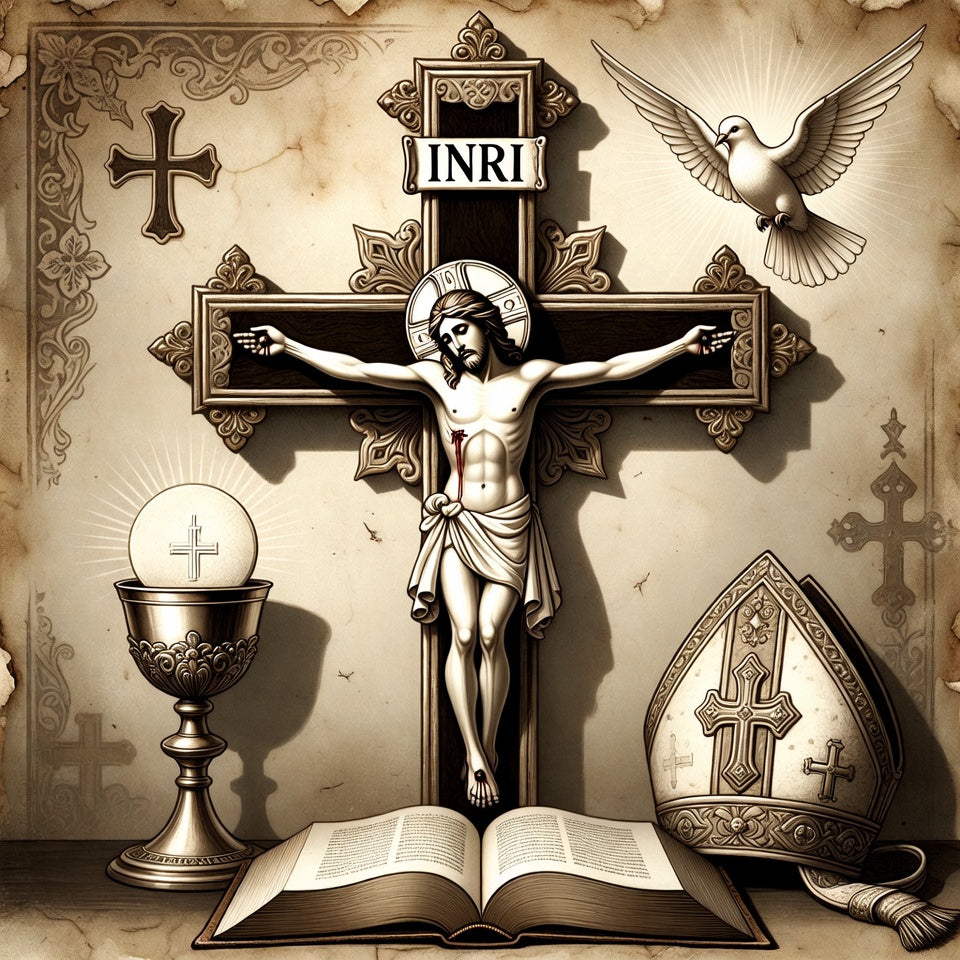
In a world adrift amid fleeting ideologies, the eternal truths of the Catholic faith stand as a beacon of divine light, calling souls to the embrace of Our Lord Jesus Christ. As St. Athanasius valiantly defended the divinity of the Son against Arian heresy, so too must we today cling to the unchanging doctrines handed down through the apostles. This exploration of core beliefs and doctrines in Catholicism explained seeks to illuminate the fundamentals of Catholicism, fostering a deeper devotion to God and His Church. Rooted in Sacred Scripture, the teachings of the Church Fathers, and the Catechism of the Catholic Church basics, we shall delve into the mysteries that guide the faithful toward sanctity and salvation.
The Holy Trinity: The Central Mystery of Catholic Faith Teachings
At the heart of Catholic core beliefs lies the doctrine of the Holy Trinity—one God in three Divine Persons: Father, Son, and Holy Spirit. This profound mystery, revealed by God Himself, is professed in the Nicene Creed: "We believe in one God, the Father, the Almighty, maker of heaven and earth, of all that is, seen and unseen. We believe in one Lord, Jesus Christ, the only Son of God... We believe in the Holy Spirit, the Lord, the giver of life..." The Trinity in Catholicism is not a mere theological abstraction but the very essence of God's inner life, where the Father begets the Son eternally, and the Spirit proceeds from both.
Drawing from the Church Fathers, St. Augustine in his De Trinitate contemplated the Trinity as a reflection of love, will, and knowledge within the human soul, mirroring the divine unity. The Catechism affirms this as "the central mystery of Christian faith and life," the source from which all other truths flow (CCC 234). In the liturgy, the faithful encounter this Triune God, as the Father creates, the Son redeems, and the Spirit sanctifies.
To visualize this sacred mystery, consider a classical icon that has inspired countless believers.
A classical depiction of the Holy Trinity by Andrei Rublev, inviting contemplation of divine unity. Alt text: Traditional Catholic icon of the Holy Trinity for spiritual reflection. (Source: Public domain from Wikimedia Commons or similar Catholic art archives.)

This doctrine counters modern relativism, reminding us that God is not an impersonal force but a communion of Persons inviting us into eternal relationship.
The Seven Sacraments: Outward Signs of Inward Grace
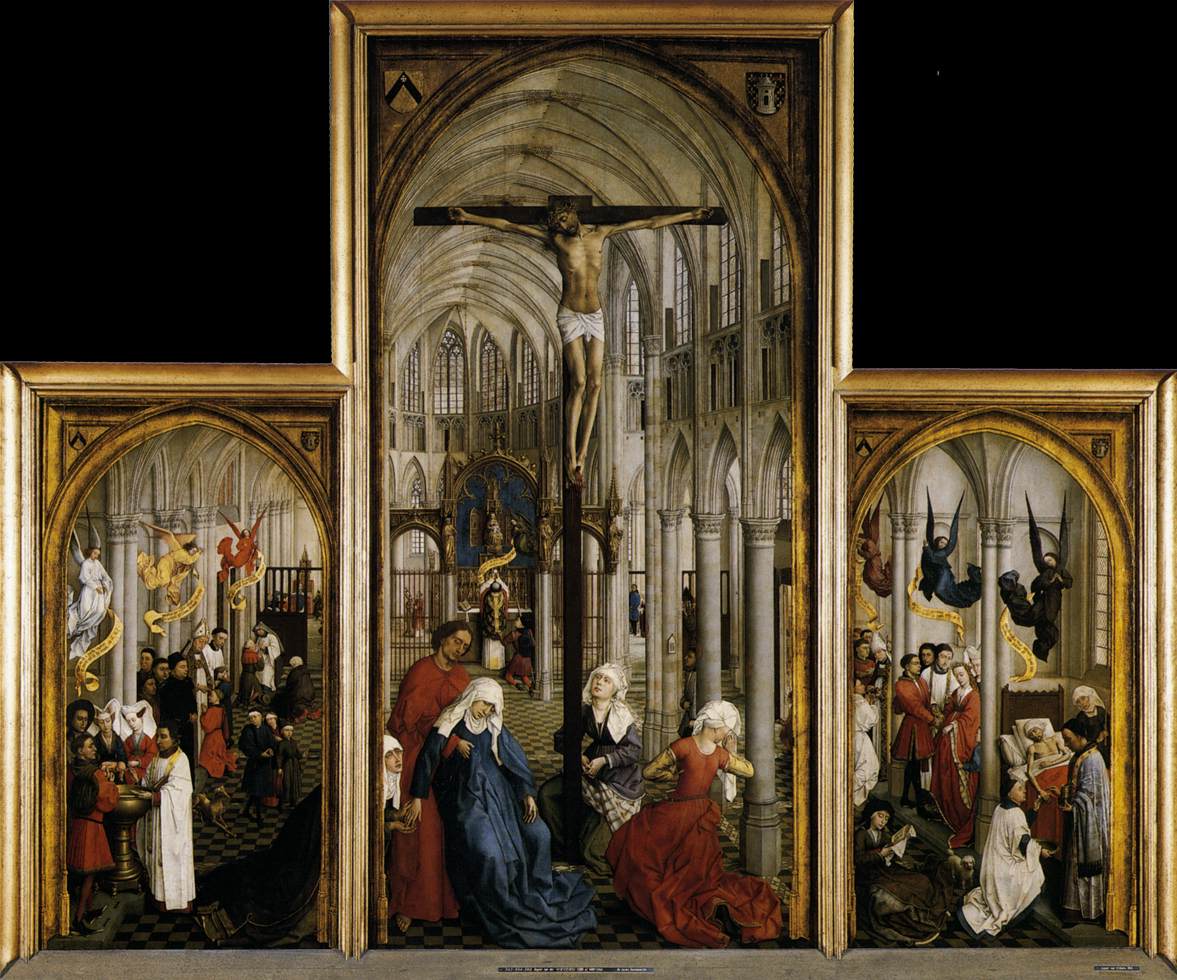
Catholic doctrines explained emphasize the seven Sacraments in the Catholic Church as essential channels of divine grace, instituted by Christ to nourish the soul. As the Catechism teaches, they are "efficacious signs of grace, instituted by Christ and entrusted to the Church, by which divine life is dispensed to us" (CCC 1131). These include Baptism, which washes away original sin and initiates the life of faith; Confirmation, sealing the baptized with the Holy Spirit; the Eucharist, the true Body and Blood of Christ; Penance for reconciliation; Anointing of the Sick for healing; Holy Orders for priestly ministry; and Matrimony for spousal union mirroring Christ's love for the Church.
St. Thomas Aquinas, in his Summa Theologica, elucidates how sacraments confer grace ex opere operato—by the work worked—independent of the minister's holiness, though the recipient's disposition matters. Baptism, for instance, is necessary for salvation, as Our Lord commanded: "Unless a man be born again of water and the Holy Ghost, he cannot enter into the kingdom of God" (John 3:5). The Eucharist, the "source and summit of the Christian life" (CCC 1324), unites us intimately with Christ.
In traditional Catholicism, frequent reception of the sacraments fortifies against sin, as exhorted by Pope St. Pius X in promoting early Communion. They are not optional rituals but vital means to holiness.
An altar painting depicting the Seven Sacraments, symbolizing the flow of grace in the Church. Alt text: Seven Sacraments in Catholic Church art for doctrinal understanding. (Source: Public domain from Web Gallery of Art or Catholic museums.)
Salvation in Catholic Doctrine: Faith Enlivened by Charity
Contrary to sola fide misconceptions, salvation in Catholic doctrine requires faith cooperating with good works, as St. James declares: "Faith without works is dead" (James 2:26). The Catechism explains that justification is "not only the remission of sins, but also the sanctification and renewal of the interior man" (CCC 1989), achieved through grace merited by Christ's Passion. Salvation is a gift, yet demands our response in obedience, prayer, and charity.
The Church Fathers, like St. Clement of Rome, urged perseverance in good works for eternal reward. Purgatory purifies those dying in grace but with venial sins, as supported by 2 Maccabees 12:46 and Tradition. Heaven is the beatific vision, hell the eternal separation from God, and the Last Judgment reveals all.
This teaching inspires moral virtue, urging avoidance of sin and pursuit of sanctity, as in the lives of the saints.
A depiction of the Crucifixion, central to Catholic understanding of redemption. Alt text: Crucifixion of Jesus Christ illustrating salvation in Catholic doctrine. (Source: Public domain from classical masters like Rubens.)

Mary and Saints Devotion: Intercession and Communion
Devotion to Mary and the saints enriches Catholic faith teachings, viewing them as intercessors in the Communion of Saints. Mary, the Theotokos (Mother of God), is hailed as "full of grace" (Luke 1:28), immaculately conceived, ever-virgin, and assumed into heaven. The Catechism calls her "Mother of the Church" (CCC 963-975), and her Rosary a powerful prayer for grace.
St. Louis de Montfort's True Devotion to Mary emphasizes consecration to her as a path to Christ. Saints, like St. Therese of Lisieux, model heroism; we venerate them, not worship, asking their prayers as in the Litany of Saints.
This communion counters individualism, uniting the Church militant, suffering, and triumphant.
A classical artwork of the Assumption of Mary, evoking Marian piety. Alt text: Traditional Catholic art of the Assumption for Mary and saints devotion. (Source: Public domain from Baroque artists like Titian.)

Living the Moral Life: The Ten Commandments and Beatitudes
The fundamentals of Catholicism include obedience to the Ten Commandments, as revealed to Moses (Exodus 20) and expounded in the Catechism (CCC 2052-2557). The first three honor God—no other gods, no vain use of His name, keep holy the Sabbath—while the latter seven guide love of neighbor: honor parents, no murder, adultery, theft, false witness, or coveting.
Christ perfects them in the Beatitudes (Matthew 5:3-12), promising blessedness to the poor in spirit, meek, merciful, and pure of heart. Pope Leo XIII's Rerum Novarum applies these to social justice, emphasizing dignity of labor.
This moral framework fosters virtue, resisting secular temptations.
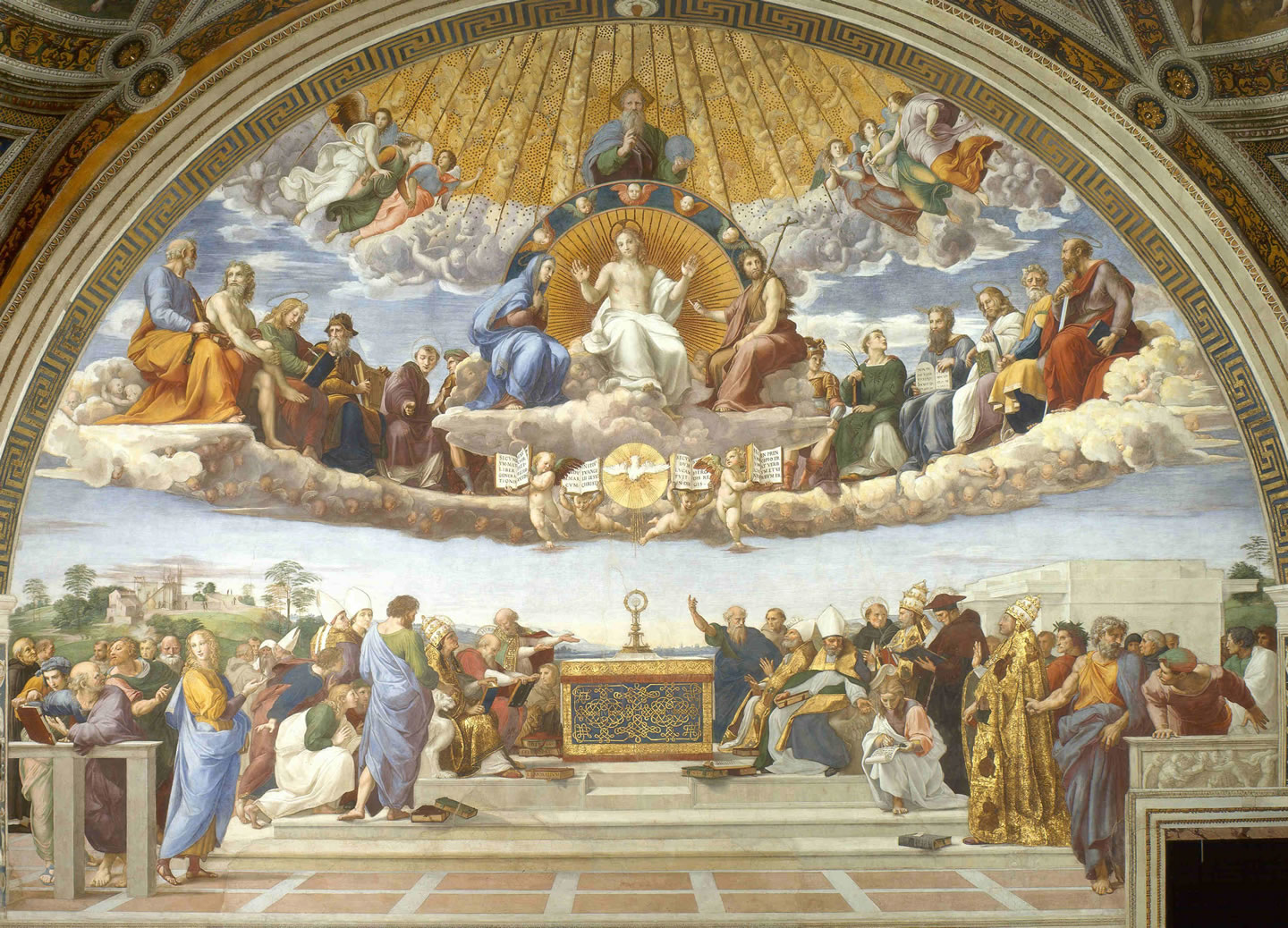
A fresco illustrating the Communion of Saints, showing heavenly intercession. Alt text: Communion of Saints in Catholic basilica art for doctrinal reflection. (Source: Public domain from Vatican or Italian churches.)
The Catechism of the Catholic Church: Basics and Eternal Guide
The Catechism synthesizes these truths, structured in four pillars: Creed, Sacraments, Moral Life, and Prayer. Promulgated by St. John Paul II, it draws from Scripture, Councils, and Fathers, offering clarity amid confusion (CCC Prologue).
It urges daily prayer, like the Our Father, and Eucharistic adoration for spiritual growth.
The cover of the Catechism, a treasury of faith. Alt text: Catechism of the Catholic Church basics for faithful study. (Source: Official Vatican editions.)

In embracing these doctrines, Catholics find the path to heaven, as exhorted by Our Lady at Fatima: pray the Rosary daily for peace and conversion.
For further reading, explore the Catechism online Vatican.va Catechism, New Advent's Encyclopedia NewAdvent.org, the Nicene Creed Vatican Creed, papal encyclicals like Lumen Gentium Vatican Documents, and St. Thomas Aquinas' works Aquinas Institute.
Dear reader, may these timeless teachings draw you closer to the Sacred Heart of Jesus. Commit to daily prayer, frequent the sacraments, and live the Commandments. Invoke the intercession of the Blessed Virgin Mary: "O Mary, conceived without sin, pray for us who have recourse to thee." Thus, may you attain the crown of eternal life


