Rosary Beads: Count and Spiritual Meaning

In the quiet sanctuaries of our hearts, where the faithful seek communion with the Divine, the rosary stands as a timeless instrument of prayer. Beloved by saints and sinners alike, this sacred chain of beads invites us to meditate on the mysteries of Our Lord's life, death, and resurrection through the intercession of the Blessed Virgin Mary. As taught by the Church, the rosary is not merely a counting device but a pathway to grace, echoing the words of Pope St. John Paul II in his apostolic letter Rosarium Virginis Mariae: "The Rosary is a prayer of great significance, destined to bring forth a harvest of holiness." In this article, we delve into the structure of traditional Catholic rosary beads, exploring their number, symbolism, and role in fostering devotion. By understanding the rosary beads count, we can deepen our Marian devotion and draw closer to Christ.
The Historical Roots of Rosary Beads in Catholic Tradition
The origins of rosary beads trace back to the early centuries of the Church, evolving from simple prayer practices among the faithful. In the monastic tradition, monks recited the 150 Psalms daily, using pebbles or knots to keep count. For the laity, who often could not read, this developed into repeating 150 Our Fathers or Hail Marys. By the 12th century, as devotion to the Blessed Virgin grew, the rosary as we know it began to form, influenced by St. Dominic, to whom Our Lady is said to have revealed it during an apparition.
According to the Catechism of the Catholic Church (CCC 2678), "Medieval piety in the West developed the prayer of the rosary as a popular substitute for the Liturgy of the Hours." This historical development underscores the rosary's role in making profound spiritual exercises accessible to all. The standard form, known as the Dominican rosary, solidified in the 15th century under the guidance of Blessed Alan de la Roche and papal approval.
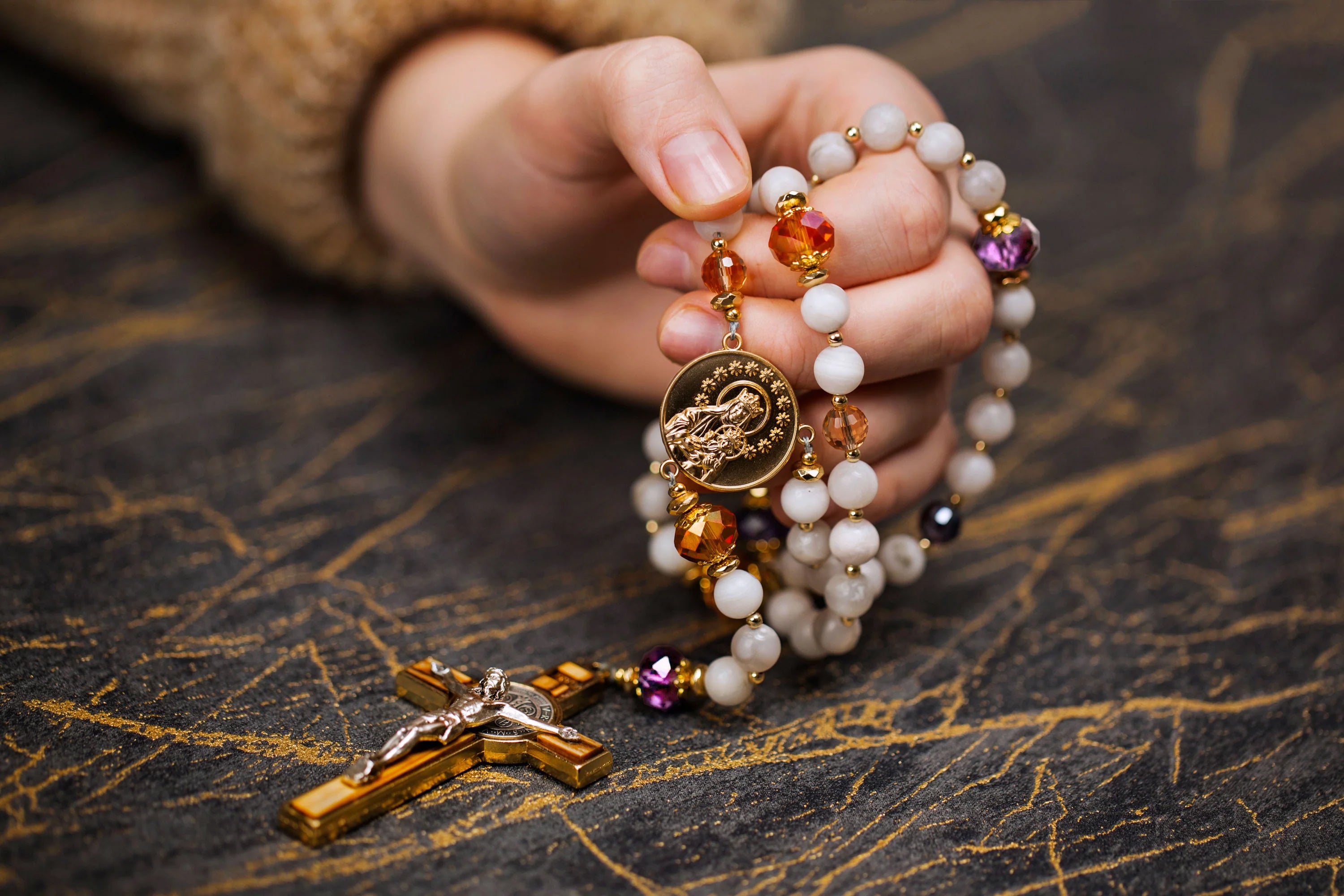
In authoritative sources, such as the Vatican's guidelines on popular piety, the rosary is described as a compendium of the Gospel, with its beads serving as tactile reminders of sacred events. This structure has remained unchanged in traditional Catholicism, resisting modern alterations to preserve its doctrinal purity.
Understanding the Structure: How Many Beads on a Rosary
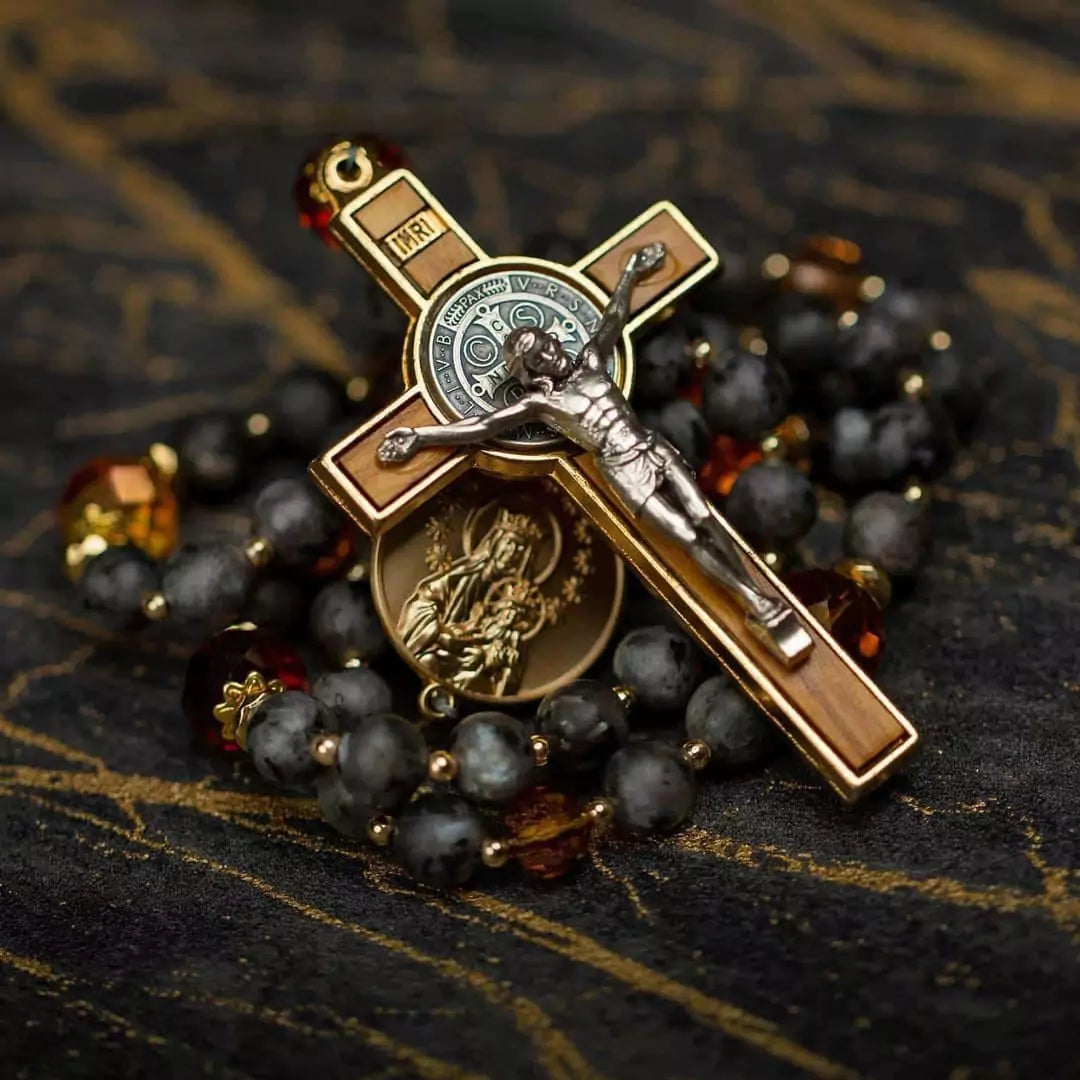
At the heart of any inquiry into rosary beads is the question: how many beads are on a traditional Catholic rosary? The answer, rooted in centuries of Church practice, is 59 beads. This count facilitates the prayer of five decades, each meditating on a mystery of faith, while incorporating introductory prayers.
Breaking it down:
The Introductory Section
The rosary begins with a crucifix, symbolizing Christ's sacrifice, followed by a short chain leading to the beads. Here, we find:
- One large bead for the Our Father.
- Three small beads for Hail Marys, invoking faith, hope, and charity.
- Another large bead for the Our Father, transitioning to the mysteries.
This introductory part totals five beads, setting a contemplative tone as per the Church's emphasis on preparatory prayer (CCC 2679).
The Decades and Mysteries
The main loop consists of five decades, each comprising:
- One large bead for the Our Father.
- Ten small beads for Hail Marys.
Thus, for five decades: 5 Our Father beads + 50 Hail Mary beads = 55 beads. Combined with the introductory five, the total rosary beads count reaches 59. These decades correspond to the Joyful, Sorrowful, Glorious, and Luminous Mysteries (added by Pope St. John Paul II but optional in traditional practice).
As explained in the New Advent Catholic Encyclopedia, this structure allows for 150 Hail Marys in a full three-set rosary, mirroring the Psalms, but the standard single rosary focuses on one set for daily devotion. Similarly, Catholic Answers confirms that the beads are grouped into decades for practical meditation on Christ's life.
The Spiritual Significance of Each Bead in Marian Devotion
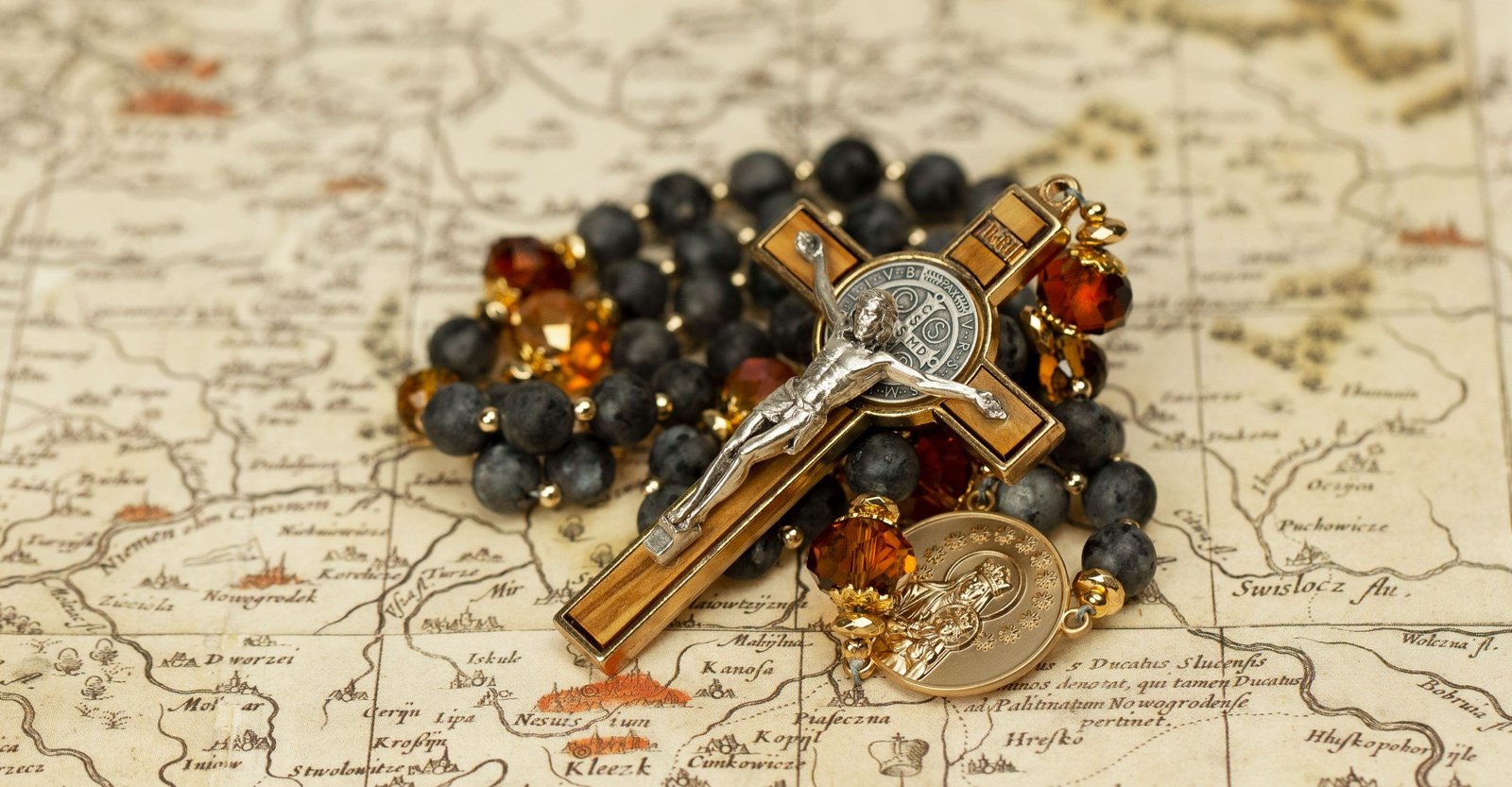
Beyond mere enumeration, each bead in the rosary carries profound spiritual weight, guiding the soul toward virtue and sanctity. The Our Father beads remind us of our filial relationship with God the Father, as Christ taught in Matthew 6:9-13. The Hail Mary beads, drawn from Luke 1:28 and 1:42, honor the Blessed Virgin as the Theotokos, or God-bearer, fostering humility and obedience.
St. Louis de Montfort, in his True Devotion to Mary, describes the rosary as "a blessed blend of mental and vocal prayer" that unites us to the mysteries of salvation. Each bead becomes a step in contemplating these events: from the Annunciation's fiat to the Coronation's triumph. This meditation combats vice, as Pope Leo XIII noted in his encyclical Supremi Apostolatus Officio (1883), proclaiming the rosary a weapon against evil.
In traditional Catholicism, the rosary beads also symbolize the chain binding heaven and earth, with Mary's intercession pulling souls from sin. The Catechism affirms: "The repetition of the Hail Mary is the warp on which is woven the contemplation of the mysteries" (CCC 2708).

Variations in Rosary Beads: Staying True to Tradition
While the standard Dominican rosary has 59 beads, variations exist within orthodox practice. For instance, the Franciscan Crown rosary features seven decades (72 beads) honoring the Seven Joys of Mary, as approved by the Church. Smaller chaplets, like the Servite Rosary of the Seven Sorrows, have 49 beads.
However, faithful Catholics must discern authentic forms from novelties. The Church warns against alterations that dilute doctrine, as in Pope Pius XII's Ingruentium Malorum (1951), urging adherence to approved devotions. For those seeking portability, a one-decade rosary ring or bracelet offers 10-11 beads, but the full rosary remains ideal for complete meditation.
To verify, resources like Catholic.com emphasize that the traditional rosary structure promotes spiritual discipline without excess.
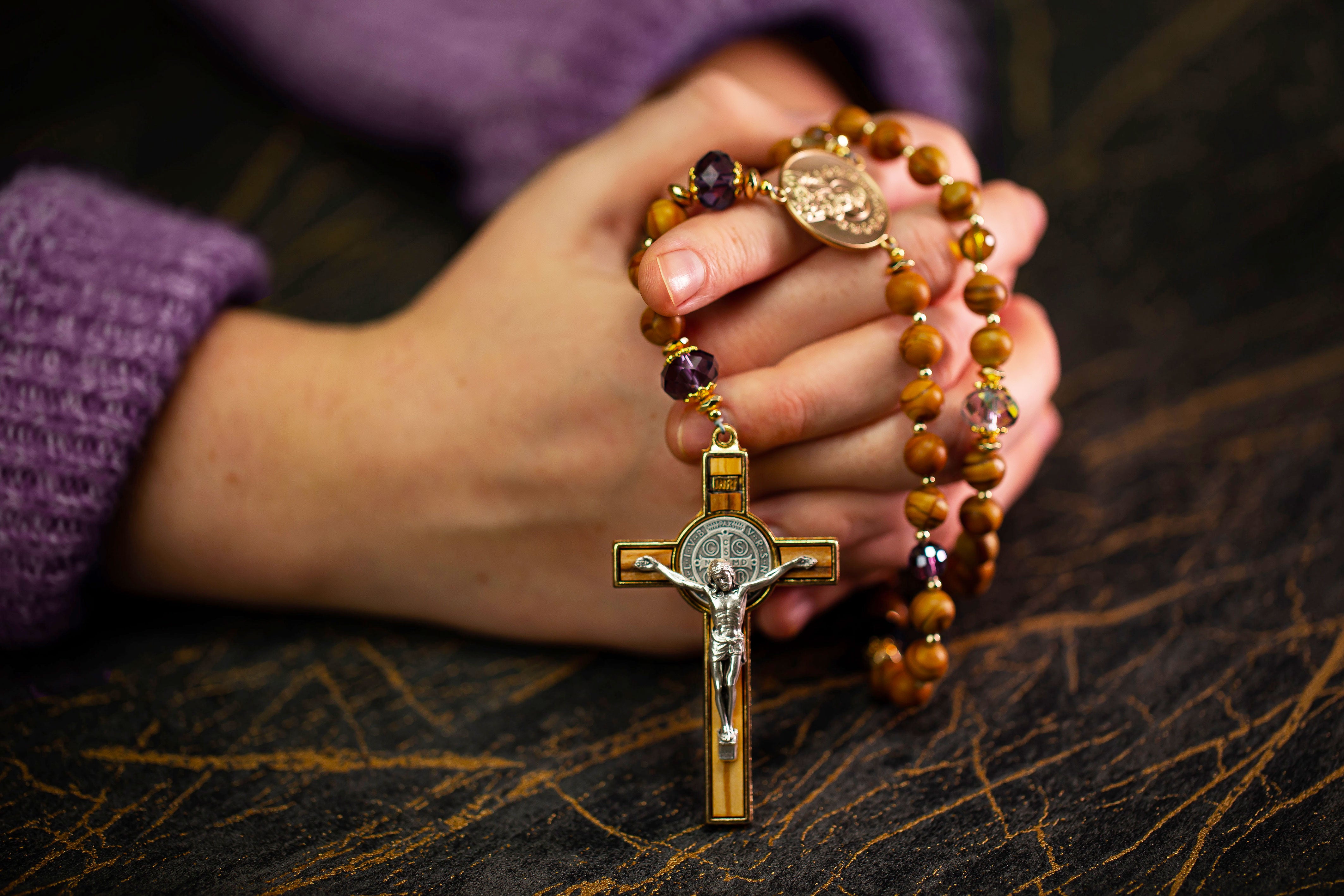
Praying with Rosary Beads: A Guide for Daily Devotion
To harness the power of rosary beads, one must pray with intention and reverence. Begin with the Sign of the Cross on the crucifix, professing the Apostles' Creed. Proceed to the introductory beads: Our Father, three Hail Marys, Glory Be.
For each decade:
- Announce the mystery (e.g., "The First Joyful Mystery: The Annunciation").
- Pray the Our Father on the large bead.
- Recite ten Hail Marys on the small beads, meditating on the mystery.
- Conclude with the Glory Be and Fatima Prayer.
This method, outlined in Vatican documents, transforms rote repetition into contemplative union with God. St. Padre Pio, who prayed dozens of rosaries daily, exemplified this: "The rosary is the weapon for these times."
For families, group recitation strengthens communal bonds, as encouraged in Familiaris Consortio (1981). In times of trial, the rosary beads become a lifeline, invoking Mary's protection as at Fatima, where she urged daily rosary for peace.

The Graces and Indulgences Attached to Rosary Beads
The Church bestows plentiful graces upon those who pray with rosary beads devoutly. Plenary indulgences are granted under usual conditions for reciting the rosary in a church or family group, as per the Enchiridion Indulgentiarum (1999). These spiritual treasures remit temporal punishment due to sin, aiding the soul's purification.
Saints like St. Therese of Lisieux attested to the rosary's efficacy: "The rosary is a long chain that links heaven and earth." Through it, virtues flourish—patience in sorrow, joy in hope—aligning with Romans 12:12.
Blessed rosary beads, often by a priest invoking Mary's aid, become sacramentals, warding off evil as taught in CCC 1674.
Common Questions About Catholic Rosary Beads
Why 59 Beads Specifically?
This count supports five mysteries, aligning with the Psalter's 150 prayers in abbreviated form, promoting daily discipline.
Can Rosary Beads Be Made of Any Material?
Traditionally, wood, glass, or precious stones; the material matters less than the devotion, though durable ones aid longevity.
How to Choose Quality Rosary Beads?
Seek those blessed and sturdy, perhaps from artisans preserving Catholic craftsmanship, ensuring they facilitate prayer without distraction.
From Catholic Answers, the beads' design aids focus on the mysteries rather than mechanics.
Conclusion: Embrace the Rosary for Eternal Life
In a world besieged by distractions, the humble rosary beads offer a sanctuary of peace, drawing us into the heart of the Church's timeless teachings. With their precise count of 59 beads, they guide our prayers toward the Blessed Virgin, who leads us unerringly to her Son. As Pope Pius XII exhorted, "Let the very children learn to venerate the Mother of God through the rosary." May we, too, take up these sacred beads daily, fostering moral virtue and spiritual growth.
We invite you, dear reader, to pray the rosary today, perhaps joining a parish group or family recitation. For those seeking quality rosaries, explore handcrafted options at Theotokos Rosaries that honor tradition. Let us unite in this devotion, imploring Mary's intercession for the conversion of sinners and the salvation of souls. Ave Maria!